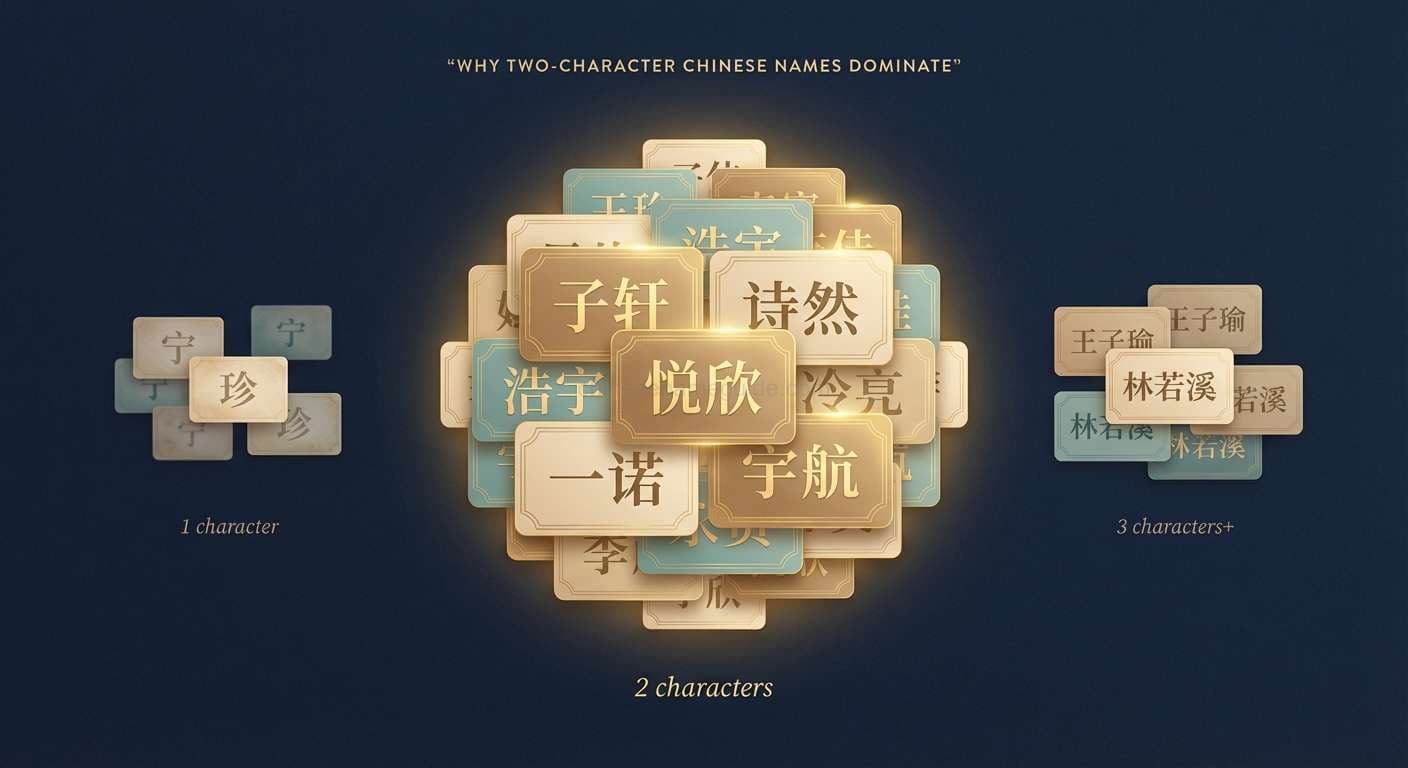
Modern Chinese Names: What Kids Are Actually Called Now
Forget Li Ming and Wang Wei. A ground-level look at what Chinese kids are really named today, what those names signal, and how to sound modern without sounding ridiculous.
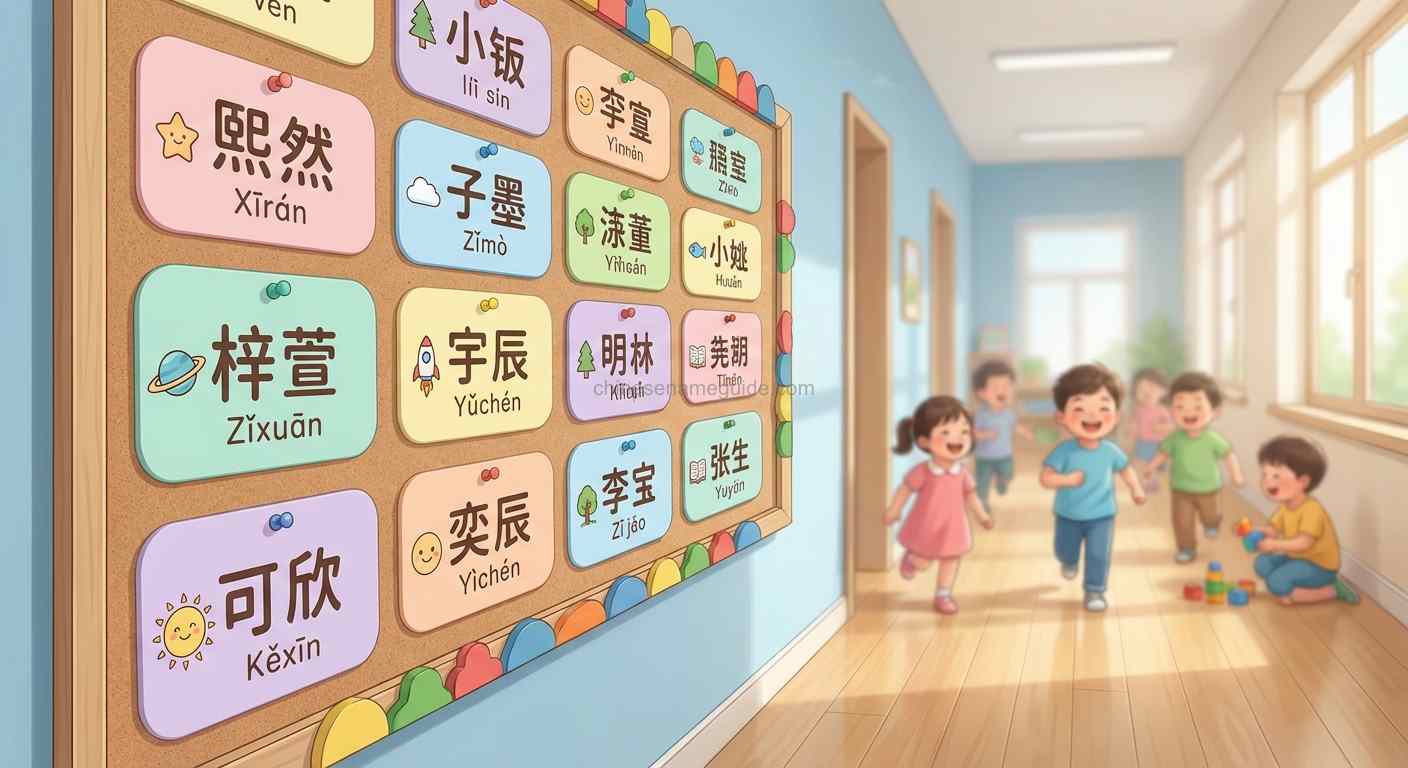
Walk into a kindergarten in Beijing or Shanghai right now and listen to roll call. You won’t hear many Lǐ Míng or Wáng Wěi (the textbook default names) anymore.
Instead, you’ll hear:
奕辰、宇轩、浩宇、子墨、梓萱、一诺、沐晨…
To a learner, they look like pretty, slightly mysterious character strings. To Chinese parents, they are immediately recognizable as very 21st-century names.
This piece is not a baby-name list. It’s a tour of how Chinese naming has changed, and what counts as modern in real life:
- how Mainland, Taiwan, and overseas Chinese have shifted away from “old school” patterns
- the signatures of modern names (hint: universe, nature, minimalism)
- what these choices say about parents, values, and class
- how to use this knowledge if you want a modern Chinese name yourself
Three Snapshots of “Modern” Names
Let’s start with three real snapshots.
Mainland China: the “universe kids”
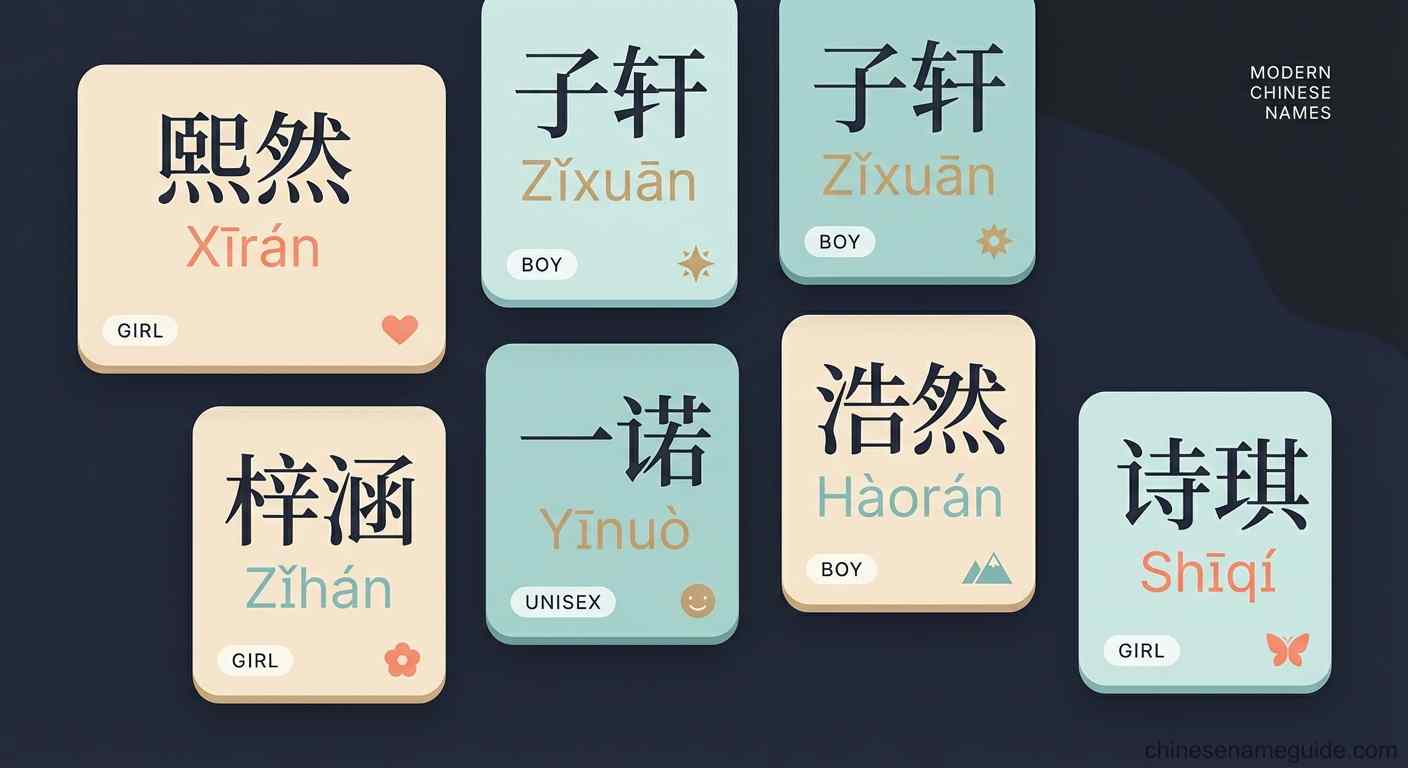
Official stats for Mainland newborns in 2020 show that the most common boy’s name was some form of Yìchén 奕辰 / 亦辰 / 宇辰, and the most common girl’s name was Yīnuò 一诺.
Look at the Top 10 boy names and a pattern jumps out:
- 奕辰 Yìchén
- 宇轩 / 宇軒 Yǔxuān
- 浩宇 Hàoyǔ
- 宇辰 Yǔchén
- 子墨 Zǐmò
- 宇航 Yǔháng
- 浩然 Hàorán
- 梓豪 Zǐháo…
Characters like:
- 宇、宙、宸、辰、昊 – universe, space, celestial time
- 浩 – vast, immense
- 子 – son, “refined person”
are everywhere. Modern Mainland parents are clearly in love with cosmic-sounding names: big sky, big world, big future.
For girls, you see:
- 一诺 Yīnuò – “one promise”
- 梓萱 Zǐxuān – catalpa tree + daylily
- 梓涵 Zǐhán – catalpa + “to contain, cultured”
Still gentle, but much less “Mei-Ling-Orchid-Jade” than textbook examples.
Taiwan: caught between 家豪 and 奕辰
In Taiwan, statistics show that among existing adults, the most common names are still things like 家豪 (Jiāháo) for men and 淑芬 (Shúfēn) for women — very 70s–90s in flavor.
But if you look at newborns over the last decade, media reports show parents are chasing many of the same trends as the Mainland:
- boys named 浩然、子轩、皓轩
- girls named 梓萱、梓涵、诗涵
Again: 浩 (vast), 子, 轩/軒 (lofty), 梓 (catalpa), 萱 (daylily), 涵 (inner depth) — the vocabulary of modern, slightly literary middle-class taste.
So in one family you might meet:
- dad called 志明 Zhìmíng (“will + bright”)
- mom called 秀美 Xiùměi (“elegant beauty”)
- son called 奕辰 Yìchén and daughter called 梓萱 Zǐxuān
Three generations, three aesthetics.
Overseas & Hong Kong: hybrid lives, hybrid names
In Hong Kong and diaspora communities, there’s an extra layer:
- a Chinese name in characters
- an English name for daily use
- sometimes a nickname / online handle on top
Common patterns:
- Traditional-character names with Cantonese-flavored choices
- English + Chinese pairing: “Chloe 陳語彤”, “Marcus 李浩然”
- Online IDs that look like: 小宇宙xoxo, 沐沐MuMu, mixing hanzi, Latin letters, emojis
The “modern Chinese name” here isn’t just about characters — it’s about switching between scripts, languages, and identities depending on context.
What Makes a Name Feel Modern?
Across regions, a few strong signals show up again and again.
1 From “Revolution & Virtue” to “Universe & Self”
If you look at names of Chinese people born in the 50s–70s, you see a lot of:
- 建国 Jiànguó – build the nation
- 军 / 軍 Jūn – army
- 伟 Wěi – great, mighty
- 志强 Zhìqiáng – strong will
These come from a period where names carried collective and political ideals.
By contrast, popular names for kids born after 2000:
- 奕辰、宇轩、浩宇、子墨、梓萱、沐辰、子瑜…
are about:
- boundaries of the self (子 “refined self”, 墨 “ink” for art, 思 for thought)
- cosmos and landscape (宇、宙、辰、昊、沐、岚、溪)
- aesthetic mood rather than clear moral slogans
The center of gravity has moved from “serve the country” to “develop a unique, talented self in a big world”.
2 The cosmic vocabulary: 宇、宸、辰、昊
Modern name lists for boys (and sometimes girls) are full of characters like:
- 宇 (yǔ) – the space of the universe
- 宙 (zhòu) – time of the universe
- 宸 (chén) – originally the imperial residence; now “lofty, noble”
- 辰 (chén) – heavenly bodies / time marker
- 昊 (hào) – vast sky
Combine them and you get:
- 宇宸、宇辰、奕辰、浩宇、昊天…
To a native speaker these names feel:
- aspirational, slightly poetic, middle-class
- very “post-2000 kid” — you definitely wouldn’t give them to someone born in 1962
3 The “zǐ-wave”: 子 as a gender-flexible marker
The character 子 used to mean “son, child” or “master” (as in 孔子 Confucius, 孟子 Mencius). In modern names it becomes a soft, classy syllable used across genders:
- Boys: 子墨、子涵、子豪
- Girls: 子萱、子若、子琪
- Unisex: 子晨、子瑜、子宁
Notice how 子 + nature / talent / virtue creates names that feel:
- a bit scholarly
- gentle rather than macho
- neither strongly boyish nor sugary feminine on first look
That’s very much a 2020s taste.
4 Soft nature, not just flowers
Traditional female names leaned heavily on flowers and beauty: 梅 (plum blossom), 兰 (orchid), 芳 (fragrance), 美丽 (beautiful).
Modern names still love nature, but the palette has widened:
- trees: 梓 (catalpa), 桐 (paulownia), 榆 (elm)
- water & light: 沐 (bathe), 澄 (clear), 漪 (ripples), 曦 (dawn light)
- landscape: 岚/嵐 (mountain mist), 峰 (peak), 川 (river), 溪 (stream)
You get names like:
- 梓萱、梓涵、沐阳、沐辰、岚溪、晨曦、潇然…
They feel calm, aesthetic, vaguely Instagram-filter, and they show up in both boy and girl lists.
5 Concept names: one idea, one promise
Yīnuò 一诺 — Mainland’s top girl’s name in 2020 — literally means “one promise”. It’s not a description of looks or strength; it’s a whole concept packed into two characters.
Other examples you’ll see:
- 一诺 – one promise
- 以诺 – “to use / follow + promise” (same sound, different characters)
- 若惜 – “if only [we could] cherish”
- 思源 – “think of the source” (remember where you came from)
- 承恩 – “to receive grace / kindness”
A modern name can read like a tiny motto, almost a two-character life slogan.
Why Did Names Change This Way?
Several big forces nudged Chinese parents away from “Guoqiang” and toward “Yichen”.
1 From collective story to private story
The revolution years favored names about:
- liberating the nation
- serving the people
- being strong, brave, productive
Reforms, urbanization, and the one-child era pushed families toward individual destiny:
- one child = one shot, so the name should feel special
- more exposure to books, pop culture, global aesthetics
- less pressure to carry a political slogan inside a name
So instead of 建国 (“build the nation”), you get names that quietly say:
“Please be wise, kind, creative, and don’t get crushed by this crazy world.”
2 Middle-class taste and the “Bestseller Name”
With each province publishing annual baby name reports, media started posting “Top 10 Names” articles. Parents read them, laugh about them… and still often choose from the same pool.
That’s how you end up with tens of thousands of little 奕辰 and 一诺 across the country.
Picking something like 宇轩/梓萱 has a similar energy to naming your kid Liam or Olivia: modern, a bit basic, but socially safe.
3 Internet aesthetics and “网名”
Alongside legal names, people now maintain:
- 网名 (wǎngmíng) – online handles
- game IDs
- pen names on social media, fanfic sites, streaming platforms
These can be:
- hyper-poetic: 「北城以北皆是荒凉」 (“north of the northern city, all is desolation”)
- cute: 「小满月」「糯米团子」
- mixed-script: 「星河Rocket」、「MuMu沐沐」
This internet naming culture feeds back into real names — parents borrow characters and moods but dial them down to something registrable.
The Hidden Traps in “Modern” Names
If you’re trying to sound up-to-date as a non-native speaker, it’s easy to overshoot.
1 Accidentally picking a “爆款名” (overused hit name)
奕辰、宇轩、浩宇、子萱、梓萱、梓涵、一诺… These are so popular that in some classes there might be two or three kids with the exact same name.
If you choose one of them as your Chinese name:
- it does sound modern
- but it also screams “I picked whatever showed up first in a ranking list”
That may be fine for a learner; for a writer or public persona, you might want something adjacent rather than identical.
2 Over-aesthetic, under-practical
Some names that look perfect on Pinterest:
- use extremely rare characters
- mix simplified + traditional in one name
- are long idiomatic phrases chopped into two characters
They look amazing in calligraphy… and then:
- your Chinese friends can’t type them without searching
- government/HR systems choke on them
- the name feels more like a book title than a person
Modern Chinese parents are aware of this and often avoid characters that are too obscure or too hard to write, even if they’re pretty.
3 Mis-matched era and region
A name like 梓萱 is:
- very Mainland/Taiwan post-2010
- quite feminine
- somewhat cliché there
Using it as a 40-year-old male expat in Hong Kong would be… off.
Modern-ness is not universal. A name can feel:
- modern in one region
- dated in another
- neutral in textbooks
You always have to triangulate: time + place + age.
Want a Modern-Feeling Chinese Name? Think in Tracks.
Instead of copying a “Top 10” list, it helps to decide which track you want to stand in.
Track 1 — Mainstream 2020s
Goal: blend in with kids and young adults in Mainland / Taiwan.
- Use common modern characters: 宇、宸、辰、奕、子、梓、萱、沐、晨、涵、安、诺…
- Avoid “爆款 combos”, or tweak them slightly:
- Instead of 奕辰, maybe 奕川 (“elegant + river”)
- Instead of 梓萱, maybe 梓岚 (“catalpa + mountain mist”)
Result: feels real and modern, but not a copy-paste of the hottest name rankings.
Track 2 — Mildly literary, age-flexible
Goal: a name that sounds contemporary, but also works if you’re 25, 35, 45.
- Mix modern nature with timeless virtues:
- 宇安 – cosmos + peace
- 沐言 – bathe + words (gentle, bookish)
- 星澄 – star + clear
These look modern but don’t lock you into one generation as strongly as 奕辰 / 梓萱 does.
Track 3 — Internet-only alter ego
Goal: for socials, games, creative work. Here you can go wild on purpose:
- longer poetic strings: 暮色星河, 南风知我意
- cute reduplication: 棉棉, 糯糯, 星星
- mixed script: 星河Rocket, MuMu沐
But don’t confuse these with legal names. What’s fun on Bilibili will look absurd on a tax form.
A Mini Glossary of Very “Now” Characters
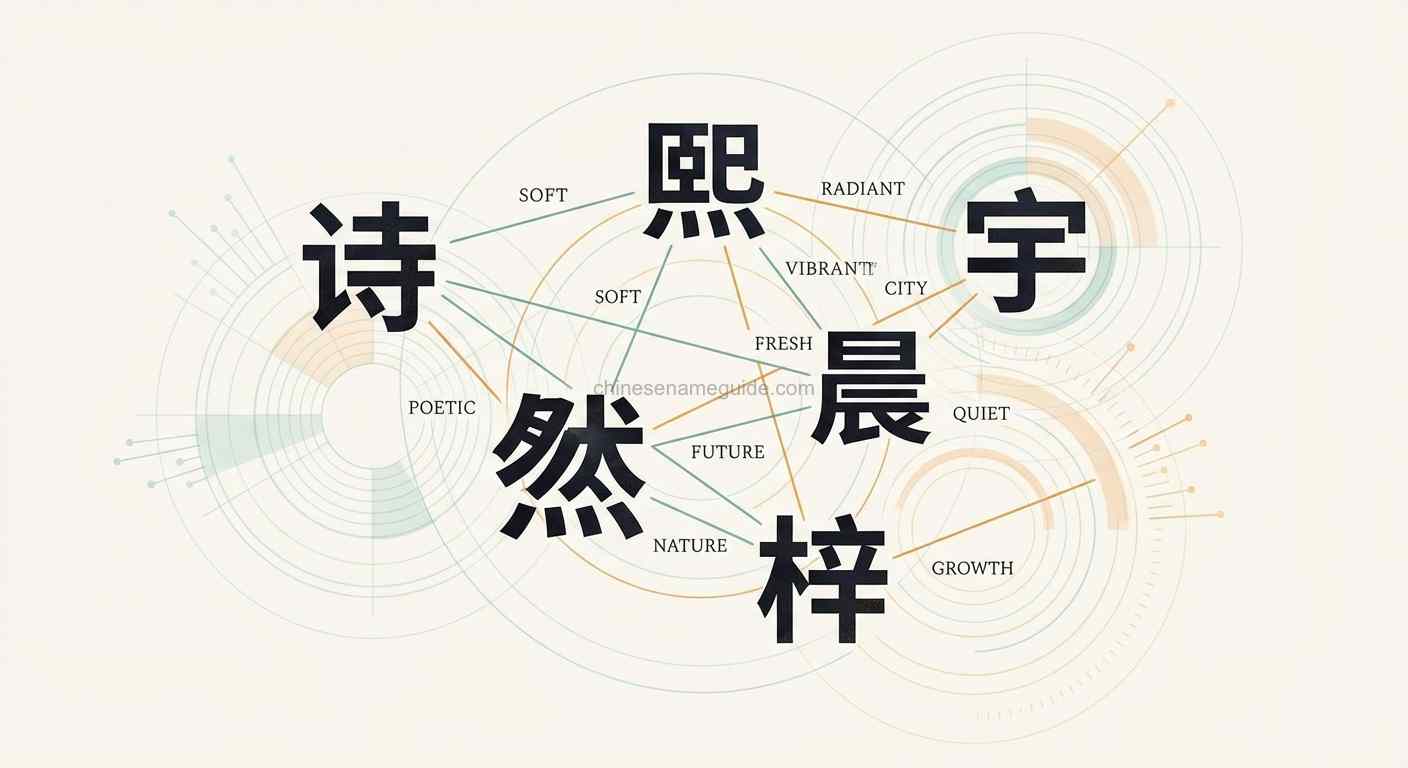
Here’s a quick reading guide for some of the hottest components you’ll meet in modern names:
- 宇 (yǔ) – universe, space → big horizons, modern, often masculine but also unisex
- 宸 (chén) – imperial residence → lofty, elegant, internet-poetic
- 辰 (chén) – celestial time → stars, destiny, trendy and gender-neutral
- 奕 (yì) – grand, splendid → elegant, often used in boy names like 奕辰
- 子 (zǐ) – child / master → refined self, works for all genders
- 梓 (zǐ) – catalpa tree → very popular, feels “cute-literary”
- 萱 (xuān) – daylily → traditional but hot again in 梓萱 etc.
- 沐 (mù) – to bathe (often in light) → fresh, soft, used in沐晨、沐阳
- 澄 (chéng) – clear, limpid → emotional clarity, quiet strength
- 安 (ān) – peace → timeless, widely used in modern girl and boy names
- 诺 (nuò) – promise → trendy, especially in 一诺 / 以诺
- 晨 (chén) – morning → hopeful, used for both boys and girls
Recognizing these lets you “read” modern names at a glance: you’ll immediately feel which ones are cosmic, which are earthy, which are quietly bookish.
One Last Thought
“Modern Chinese name” doesn’t just mean new characters. It means:
- new stories about what a good life is
- parents projecting soft power dreams (cosmos, education, inner peace) instead of hard slogans
- people juggling multiple identities (legal name, English name, online name) and letting them talk to each other
If you’re choosing a Chinese name for yourself, you don’t have to chase the exact same trends as Mainland parents. But knowing what 奕辰 & 梓萱 signal — and why they look nothing like 建国 & 淑芬 — will help you decide:
Do I want to sound like a 2020s kid from Shanghai? Or do I want something that nods to modern taste, but stands a little outside the curve?
Once you know the landscape, “modern” stops being a random aesthetic and becomes a choice you can actually control.
Related Articles
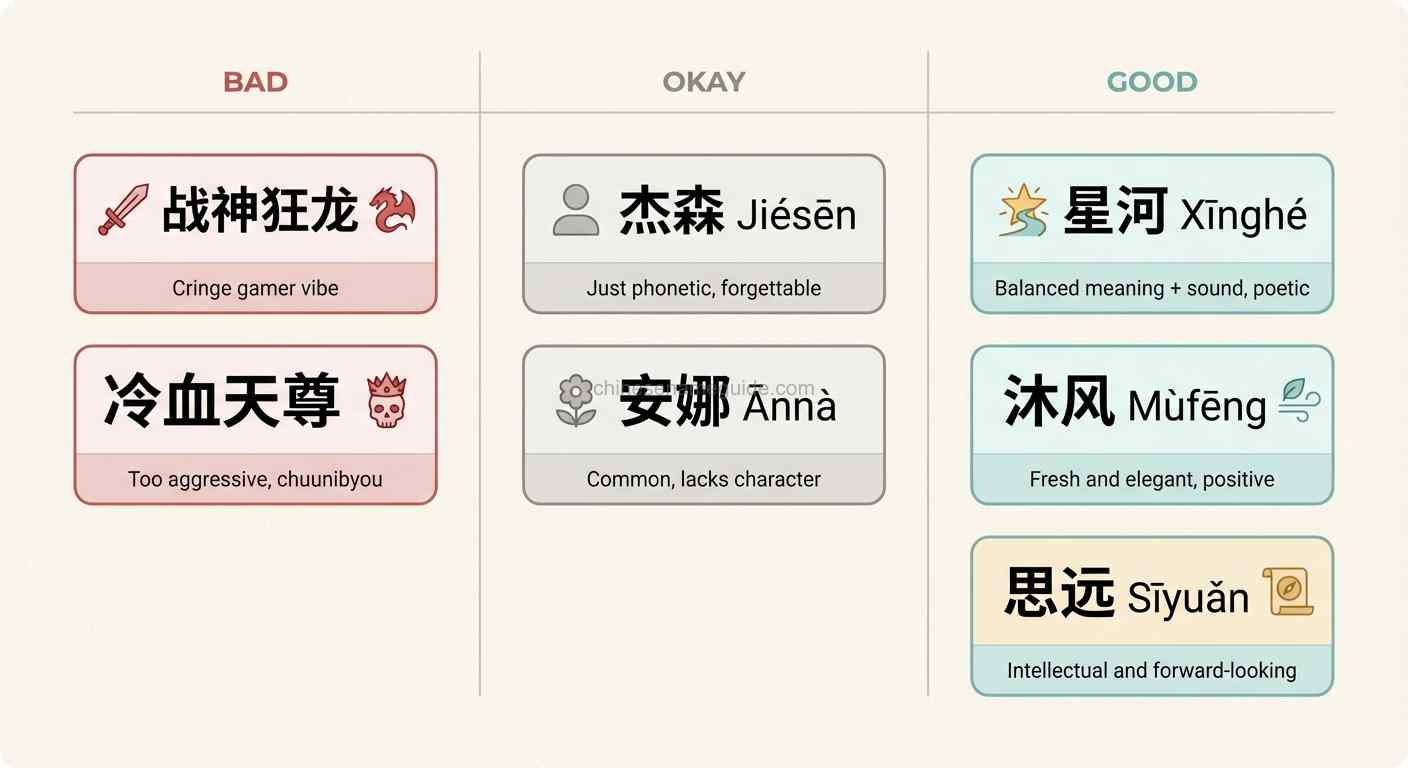
Why Most Chinese Name Generators Are Dangerous (Don't Get a Tattoo Yet!)
Before you tattoo a ‘cool Chinese name’ or launch a brand with it, read this. A brutally honest look at how most Chinese name generators actually work — and why they can quietly ruin your skin, your brand, or your reputation.
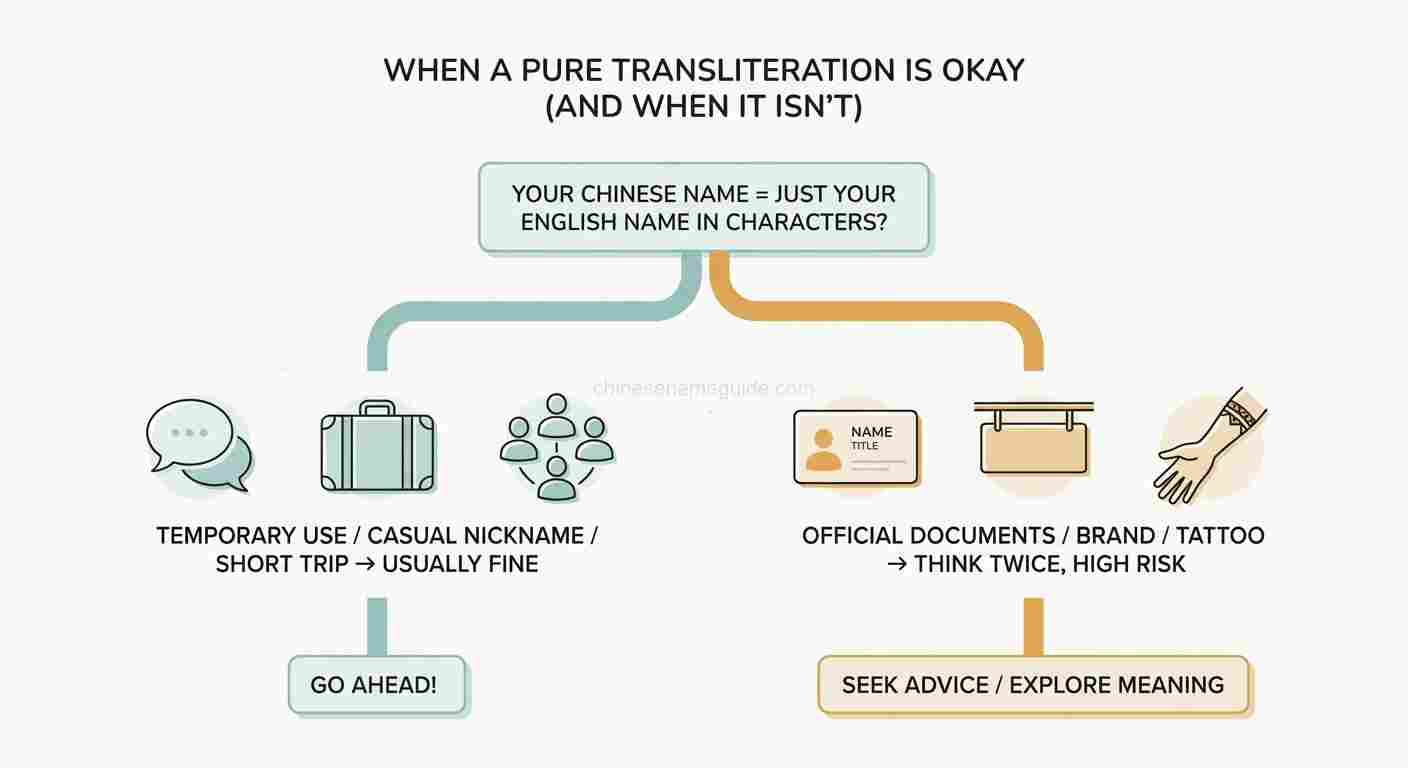
When Your Chinese Name Is Just Your English Name in Characters
An in-depth look at Chinese names that are pure transliterations of English names—how they’re built, how native speakers perceive them, and when they’re useful or risky.