Chinese Boy Names: Meanings, Patterns, and 40+ Real Examples
A deep, practical guide to Chinese boy names — how they’re built, what ‘masculine’ means in Chinese naming, and dozens of real names with characters, pinyin, and meanings.
If you only know a few Chinese male names like Wei, Jun, or Long, it’s easy to think all Chinese boy names are about:
power, dragons, and being “great”.
That is one important theme — but modern Chinese boy names are much richer:
- many use nature and cosmos (ocean, stars, universe)
- some highlight character & values (bravery, integrity, wisdom)
- recent trends lean into gentle, scholarly, even poetic styles, not just “strong warrior” vibes
This guide walks you through how Chinese boy names really work:
- Basic structure of a Chinese boy’s name
- What makes a name “boy-ish” in Chinese (and why it’s fuzzier than you think)
- Classic themes in masculine names (strength, virtue, nature, knowledge)
- How styles changed from grandparents → parents → Gen Z kids
- 40+ example Chinese boy names (characters, pinyin, meanings)
- How to choose a Chinese boy name (for your baby, character, or yourself)
Quick Crash Course: How a Chinese Boy Name Is Built
A modern Chinese full name is usually:
[Surname] + [Given name (1–2 characters)]
Examples:
- 王勇 (Wáng Yǒng) – Wang + “brave”
- 李浩然 (Lǐ Hàorán) – Li + “vast, upright”
- 陈宇轩 (Chén Yǔxuān) – Chen + “universe, lofty”
Key points:
-
Surname (family name)
- Almost always 1 character / 1 syllable (李 Lǐ, 王 Wáng, 张 Zhāng, 陈 Chén…).
- Comes first in Chinese order.
-
Given name (personal name)
- Usually 2 characters in modern China; 1-character names also exist.
- Carries the meaning, personality, and wishes of the parents.
- There is no fixed list—parents can choose almost any characters that make sense.
So when we talk about “Chinese boy names” below, we’re really talking about boy-style given names — the part after the surname.
Do Chinese Names Have Gender?
Yes — but not by grammar, like “-a = girl” in some European languages.
Studies on Chinese given names show that gender is encoded in a mix of factors:
- Which characters appear (flowers vs. heroes vs. virtues)
- Meaning fields (beauty vs. strength vs. ambition)
- Sound patterns (lighter vs. heavier syllables)
- Reduplication (e.g. Tingting 婷婷 is strongly feminine)
Traditional boy names often emphasize:
- strength, health, bravery
- achievement, success, “bringing honor”
- solid, “big” imagery (mountains, oceans, dragons)
But there’s no official “male list”. Many names are ambiguously gendered, and tools that try to guess gender from Chinese Pinyin names have very high error rates.
So:
A “Chinese boy name” is a name that native speakers feel is more likely male based on meaning, sound, and tradition — not because of a strict rule.
Classic Themes in Chinese Boy Names
Let’s look at the “building blocks”. Many male names cluster around four big themes:
1 Strength, bravery, and power
Think of characters like:
- 勇 (yǒng) – brave
- 强 / 強 (qiáng) – strong, powerful
- 刚 / 剛 (gāng) – firm, tough
- 龙 / 龍 (lóng) – dragon (power, luck, authority)
These appear in many classic boy names, especially in older generations and in names that want a very “masculine” traditional feel.
Examples from modern name lists:
Lei 雷 (thunder), Qiang 强 (strong), Long 龙 (dragon), Hao 浩 (vast, grand).
2 Virtues, character, and ambition
China has a long tradition of naming boys after moral qualities and life goals:
- 伟 / 偉 (wěi) – great, mighty
- 豪 (háo) – heroic, bold
- 志 (zhì) – will, ambition
- 诚 / 誠 (chéng) – honesty
- 义 / 義 (yì) – righteousness
- 孝 (xiào) – filial piety
Names like 志强 (Zhìqiáng, “strong will”), 伟杰 (Wěijié, “great and outstanding”) are classic boy names, especially among men born in the 70s–90s.
3 Nature, cosmos, and the “big world”
Modern parents love names that feel open, expansive, and slightly poetic, often using:
- 海 (hǎi) – sea, ocean
- 山 (shān) – mountain
- 峰 / 峯 (fēng) – peak
- 宇 (yǔ) – universe, space
- 浩 (hào) – vast, immense
- 辰 (chén) – stars / heavenly bodies, time
That’s why you see names like:
- 浩宇 (Hàoyǔ) – “vast universe”
- 宇航 (Yǔháng) – “space navigation”
- 奕辰 / 亦辰 / 宇辰 (Yìchén, Yǔchén) – all involving “cosmic” 辰
This “universe boy” trend is very popular in Mainland China since the 2000s.
4 Knowledge, intelligence, and culture
Another huge cluster is about being:
- smart, wise, good at school
- cultured, literary, good with words
Common characters:
- 智 (zhì) – wisdom, intelligence
- 文 (wén) – writing, culture
- 博 (bó) – broad, abundant (knowledge)
- 学 / 學 (xué) – study, learning
A boy named 博文 (Bówén) literally carries “broad” + “literary” — a very classic scholarly male name.
How Boy Name Styles Changed Over Time
You can roughly see three eras in Chinese boy names (simplifying a lot):
1 Grandparents’ generation (born ~1950s–70s)
Names often reflected:
- collectivist ideals
- politics, revolution, strength, patriotism
Common elements:
- 军 / 軍 (jūn) – army
- 国 / 國 (guó) – country (建国 “build the nation”, 护国 “protect the nation”)
- 民 (mín) – people
- 强 (qiáng), 勇 (yǒng), 伟 (wěi) for physical/civic strength
These names can sound old-fashioned on kids today, but still appear among older men.
2 Parents’ generation (born ~1980s–90s)
Still many strength/virtue names, but more:
- individual success and intelligence than collective slogans
- characters like 杰 (outstanding), 超 (surpass), 辉/暉 (radiance)
- simple, strong-sounding names with one clear virtue
This is when names like 志鹏, 建军, 伟强, 志伟, 建华 were everywhere.
3 Kids now (born 2000s–2020s)
Modern lists of popular Chinese boy names show a huge rise in:
- Universe/cosmos characters: 宇, 浩, 宸, 辰, 昊 (sky)
- Gentle, scholarly imagery: 子 (refined person), 墨 (ink), 宇航 (space travel), 奕 (elegant, grand)
- Nature but in a softer way: 沐 (bathe, moist), 泽 / 澤 (marsh, grace), 梓 (catalpa tree), 林 (forest)
So a boy called 奕辰 (Yìchén) or 子墨 (Zǐmò) feels much more modern and literary than, say, 建国 (Jiànguó) or 志强 (Zhìqiáng).
40+ Chinese Boy Names with Meanings
⚠️ Note: These are authentic-style examples, not recommendations for copying verbatim.
Always have a native speaker double-check any name before real-world use.
I’ll group them by vibe. All can be full given names (you’d add a surname in front, e.g. 李浩然).
1 Strong & classic masculine names
These lean into strength, bravery, and presence — good for traditional or “hero” characters.
| Name | Pinyin | Literal meaning | Vibe |
|---|---|---|---|
| 勇军 / 勇軍 | Yǒngjūn | brave + army | Very old-school, war/hero tone |
| 强辉 / 強輝 | Qiánghuī | strong + radiance | Classic “power + success” |
| 刚杰 / 剛傑 | Gāngjié | firm + outstanding | Tough, determined, achiever |
| 伟峰 / 偉峰 | Wěifēng | great + peak | Ambitious, climbs high |
| 鸿涛 / 鴻濤 | Hóngtāo | great bird + big waves | Powerful, slightly poetic |
| 志宏 | Zhìhóng | will + grand, vast | Big ambitions, broad view |
| 震宇 | Zhènyǔ | shake + universe | Dramatic, stormy power |
Some of these feel a bit 80s–90s, which can be perfect if you’re naming a character born in that era.
2 Modern “universe boy” names
Inspired by recent popularity charts (宇, 浩, 宸, 辰, 航 etc.), these feel very 2000s+ in style.
| Name | Pinyin | Meaning |
|---|---|---|
| 浩宇 | Hàoyǔ | vast + universe |
| 宇轩 / 宇軒 | Yǔxuān | universe + lofty / pavilion |
| 宇航 | Yǔháng | universe + navigation (often suggests astronaut / explorer) |
| 奕辰 | Yìchén | grand / elegant + heavenly bodies / time |
| 宇辰 | Yǔchén | universe + stars/time |
| 昊天 | Hàotiān | vast sky + sky (double sky – very cosmic) |
| 亦宸 | Yìchén | also + imperial hall / lofty dwelling (popular modern styling) |
These are everywhere in recent “Top Chinese boy names” lists — they feel gentle, aspirational, big-world rather than simply “tough”.
3 Nature & landscape inspired names
Good if you like names grounded in earth, water, sky rather than pure abstract virtues.
| Name | Pinyin | Literal meaning |
|---|---|---|
| 海森 | Hǎisēn | sea + forest |
| 山楠 | Shānnán | mountain + Chinese cedar |
| 林涛 / 林濤 | Líntāo | forest + big waves |
| 江岳 | Jiāngyuè | river + high mountain |
| 沐川 | Mùchuān | to bathe/moisten + river (gentle, fresh) |
| 景行 | Jǐngxíng | scenery + to walk / conduct (from a classic phrase about noble conduct) |
| 峻峯 / 峻峰 | Jùnfēng | steep + peak |
Nature names can be quite masculine in Chinese if they emphasize mountains, rivers, waves, etc., rather than flowers and delicate plants.
4 Knowledge & scholarly names
These suit boys whose parents hope for wisdom, learning, and calm thinking.
| Name | Pinyin | Literal meaning |
|---|---|---|
| 博文 | Bówén | broad + literature |
| 文昊 | Wénhào | literary + vast sky |
| 子墨 | Zǐmò | refined person + ink (often used in modern lists) |
| 思远 / 思遠 | Sīyuǎn | think + far (far-sighted, visionary) |
| 知行 | Zhīxíng | knowledge + action (famous philosophical phrase 知行合一) |
| 书宸 / 書宸 | Shūchén | book + imperial hall (bookish + noble) |
| 明哲 | Míngzhé | clear + wise (from 明哲保身 – “a wise person who protects himself”) |
These names tend to feel calm, serious, slightly old-soul, which can be great for certain characters or for parents who value education.
5 Gentle, modern, slightly poetic boy names
These are more on the soft / healing / literary side, but are still perceived as male names in real usage.
| Name | Pinyin | Meaning |
|---|---|---|
| 容时 | Róngshí | contain + time; used in modern boy-name examples, gentle and refined |
| 沁远 / 沁遠 | Qìnyuǎn | seep/soak (usually fragrant) + far |
| 澄川 | Chéngchuān | clear + river |
| 子尧 / 子堯 | Zǐyáo | refined person + legendary wise king Yao (smart, accomplished) |
| 霖泽 / 霖澤 | Línzé | long rain + marsh/grace (continuous blessing) |
| 景澄 | Jǐngchéng | scenery + clear |
| 宸安 | Chén’ān | imperial hall / lofty dwelling + peace |
These would fit very naturally for boys born after 2000, especially in big cities / middle-class families.
How to Choose a Chinese Boy Name (For Non-Native Speakers)
Whether you’re naming:
- a baby boy,
- a novel / game character, or
- yourself as a Chinese learner,
the decision process is similar.
Step 1 – Clarify the context
Ask:
- Mainland China, Hong Kong, Taiwan, overseas Chinese community, or purely fictional?
- Real legal name, or just a pen name / username / character?
- Born which decade? (important for realism in fiction)
A 1960s rural Mainland boy will not be named 宇轩 (Yǔxuān); a 2020 Shanghai kid almost certainly won’t be 建国 (Jiànguó).
Step 2 – Decide the overall vibe
Think in English adjectives first:
- brave, sunny, adventurous
- calm, thoughtful, bookish
- cosmic, big world, explorer
- steady, grounded, “solid guy”
Then map that to the four theme buckets above:
- Strength / virtue
- Nature / cosmos
- Knowledge / scholarly
- Gentle / poetic modern
Step 3 – Pick 1–2 key characters
Using the themes and examples:
- Make a small list of characters you like:
- e.g., 浩, 宇, 林, 博, 文, 智, 安, 澄, 辰, 昊…
- Check each character’s core meaning and tone with reliable sources.
Remember:
- Avoid characters that are too rare or too complicated (hard to write / type).
- For a boy name, be cautious with flower/beauty-heavy characters (芳, 娜, 嫣, etc.), which are strongly feminine.
Step 4 – Combine and say it out loud
Combine into 2-character given names:
- Take one “big world” + one “virtue”
- 浩然 (Hàorán – vast + upright)
- 宇诚 / 宇誠 (Yǔchéng – universe + honesty)
- Or one “nature” + one “knowledge”
- 林哲 (Línzhé – forest + wisdom)
- 江博 (Jiāngbó – river + broad knowledge)
Check:
- Can you pronounce it reasonably?
- Does it sound smooth, not tongue-twisting?
- Does it accidentally sound like a common word / phrase with a weird meaning?
Step 5 – Native speaker review (non-negotiable)
Before you print it on anything:
- Ask at least one native speaker:
- “Is this a boy name?”
- “Does it sound natural? Old-fashioned? Very modern?”
- “Any weird meanings or famous people?”
You might be surprised:
- Some names that foreigners think sound cool are over-used, meme-ish, or strongly tied to a specific region / TV drama.
Step 6 – Surname & full-name check
If this is a real person, not just a given name list:
- Choose a surname (王, 李, 陈, 林, etc.) or match one from real family context.
- Say the full name in Mandarin several times.
- Make sure it does not form any unfortunate 3-character phrase.
Common Mistakes Foreigners Make with Chinese Boy Names
-
Over-obsessing over dragons and tigers
- 龙, 虎, 力, 强 everywhere can feel cliché, especially all in one name.
-
Copying from tattoo lists / random kanji images
- Many “Chinese symbol” images online are wrong, ugly, or out of context.
-
Picking characters only by look
- Some nice-looking characters have bad meanings or are very rarely used in names.
-
Ignoring generational style
- A 2025 baby called 建国 feels like your child is from a time capsule.
- An old man named 奕辰 feels equally strange.
-
Not checking with natives
- You can’t Google Translate your way into a good Chinese name. Native intuitions matter.
Final Thoughts
Chinese boy names sit at the crossroads of:
- traditional expectations (strength, honor, family)
- modern hopes (creativity, independence, “big world” horizons)
- and a language where every character carries meaning, not just sound.
That’s why a name like 浩宇 (vast universe) or 子墨 (refined ink) can feel:
- meaningful to parents,
- poetic to readers, and
- completely normal in everyday Chinese life.
Related Articles
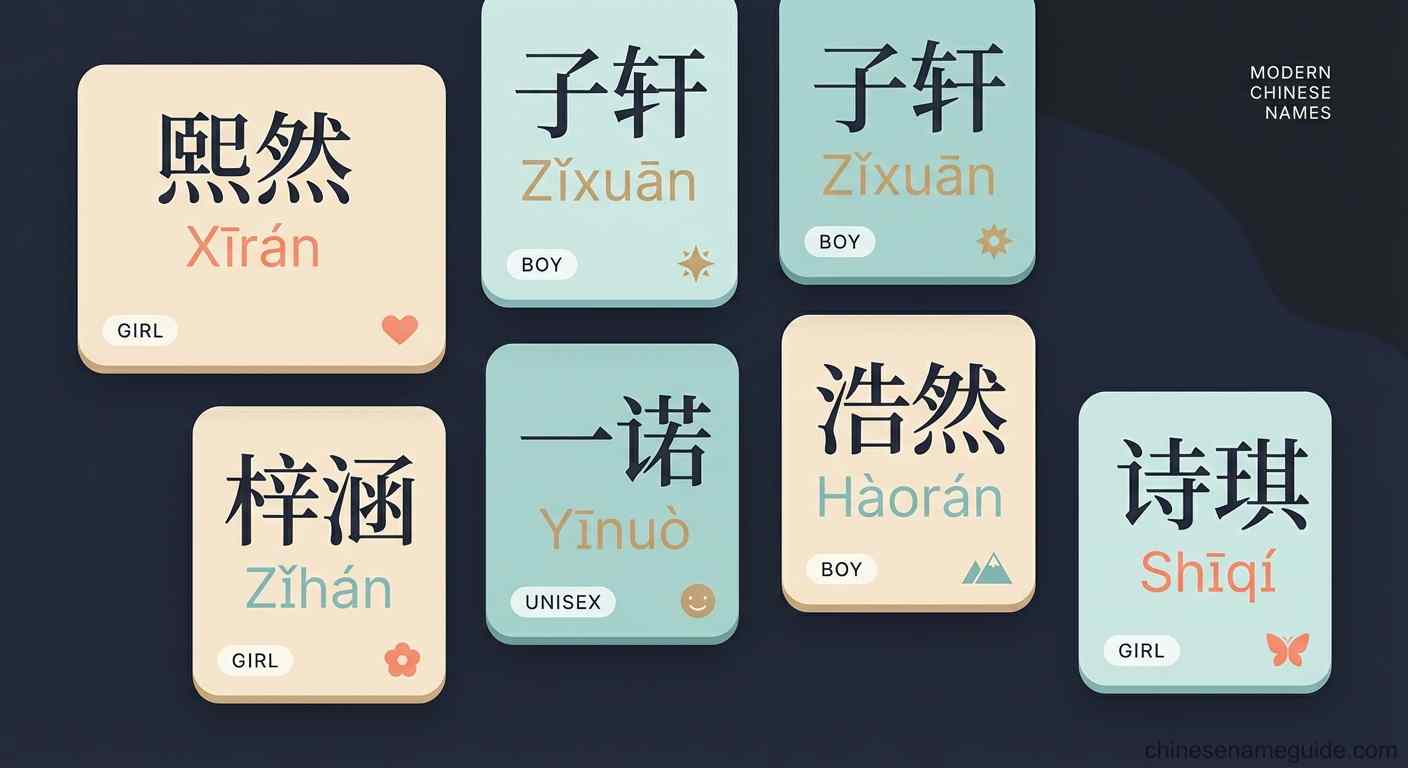
Modern Chinese Names: What Kids Are Actually Called Now
Forget Li Ming and Wang Wei. A ground-level look at what Chinese kids are really named today, what those names signal, and how to sound modern without sounding ridiculous.
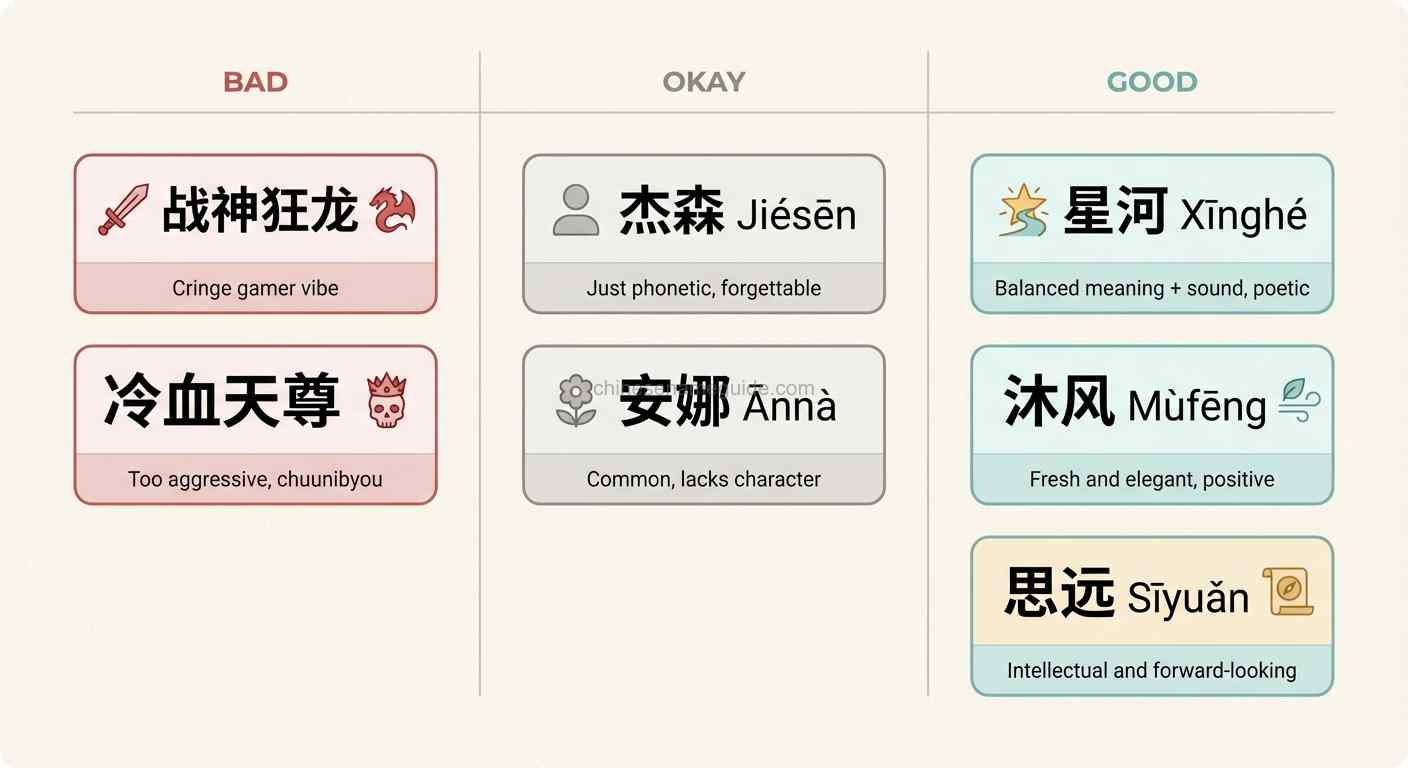
Why Most Chinese Name Generators Are Dangerous (Don't Get a Tattoo Yet!)
Before you tattoo a ‘cool Chinese name’ or launch a brand with it, read this. A brutally honest look at how most Chinese name generators actually work — and why they can quietly ruin your skin, your brand, or your reputation.