Gender-Neutral Chinese Names: How They *Really* Work (With Examples & Meanings)
A deep guide to gender-neutral Chinese names for parents, writers, and learners – how gender shows up in Chinese names, what counts as neutral, and 30+ example names with meanings.
“Is this Chinese name male or female?”
If you’ve ever tried to pick a Chinese name for yourself, a character, or a baby, you’ve probably asked this question.
The tricky part: Chinese given names don’t have clear gender labels the way many European languages do.
There’s no “-a = girl, -o = boy” rule. Instead, gender in Chinese names is a mix of:
- character meanings
- cultural associations
- sound patterns
- and modern naming trends
This also means gender-neutral Chinese names are absolutely possible—but you need to understand what “neutral” really means to native speakers, not just to you.
This guide goes deep into:
- How gender actually works in Chinese given names
- What “gender-neutral” means in practice
- How meanings, radicals and sounds signal gender (or not)
- Modern trends toward unisex names in Chinese-speaking regions
- 30+ example gender-neutral Chinese names (characters + pinyin + meanings)
- A practical step-by-step method to choose a neutral Chinese name
Do Chinese Names Have Gender?
Short answer: yes, but not rigidly.
Research on Chinese given names shows:
- There have never been strict grammatical rules for making a name feminine or masculine. Instead, names are perceived as male or female based on cultural ideas about what qualities “fit” each gender.
- Factors that push a name toward “male” or “female” include:
- certain characters or radicals (e.g., beauty/flower vs. strength/hero)
- sound symbolism (some sounds feel “lighter” vs. “heavier”)
- patterns like reduplication (e.g., Lili, Lele)
Native speakers often can guess gender from a Chinese name, but not with 100% accuracy. Even Chinese learners on forums note that names are gendered “but not as strongly as in Western naming conventions,” and that many names are ambiguous.
So:
A “gender-neutral Chinese name” is usually one that doesn’t strongly trigger male or female associations in most native speakers, even if it might lean slightly one way in certain regions or age groups.
What Counts as “Gender-Neutral” in Chinese?
There are three useful layers to think about:
- Neutral characters – characters widely used in names of all genders
- Neutral combinations (full given names) – two-character names that don’t scream “boy” or “girl”
- Neutral in context – names that might be 60–40 one way, but are still very plausible across genders
1 Neutral characters
Some characters commonly appear in names for any gender. Typical examples often listed in “unisex name” guides include:
- 安 (ān) – peace/secure
- 晨 (chén) – morning
- 林 (lín) – forest
- 明 (míng) – bright / clear
- 江 (jiāng) – river
- 秋 (qiū) – autumn
- 恒 (héng) – constant
- 光 (guāng) – light
- 宝 / 寶 (bǎo) – treasure
- 雨 (yǔ) – rain
These can be used alone (rare, more old-school) or as part of a two-character given name.
2 Neutral combinations
Parents sometimes deliberately build a neutral full name, especially if they’re naming before knowing the baby’s sex. For example, a Language Log contributor mentions being named 罗宇思 (Luó Yǔsī) as a gender-neutral choice:
- 宇 (yǔ) – universe
- 思 (sī) – thought
That name could naturally belong to any gender.
3 Neutral in context
Reality check:
- A character like 柳 (liǔ, willow) appears on “unisex lists”
- But many modern speakers feel it leans feminine (graceful willow tree imagery, often used in girl names).
So “unisex” in a baby-name blog doesn’t always mean “natives won’t read a gender into this”. True neutrality means:
- No strong “flower girl” or “martial hero” vibe
- Fits comfortably if you imagine it on a boy, girl, or nonbinary person
- Native speakers may need context or pronouns to know your gender

How Meaning & Radicals Signal Gender
Chinese names are made from characters with concrete meanings. Gender signals usually come from semantics and occasionally from radicals (the semantic building blocks).
1 Often “feminine-coded” elements
Common themes in traditionally feminine names:
- Flowers & plants
- 花 (flower), 芳 (fragrant), 莉 (jasmine), 芳, 菁, 薇 etc.
- Many of these use the “grass” radical 艹, which people on Chinese forums often point out as a quick feminine cue.
- Beauty / grace words
- 美 (beautiful), 娇 / 嬌 (delicate), 娟 (graceful), 媛 (lady), 颖 / 穎 (“talented, clever” but strongly girl-coded today)
- Soft, aesthetic imagery
- 晴 (clear sky), 霏 (fine rain), 幻 (fantasy), 纯 / 純 (pure) – context matters, but many of these skew feminine in modern usage.
2 Often “masculine-coded” elements
Traditionally masculine themes include:
- Strength / power / virtue
- 强 / 強 (strong), 刚 / 剛 (firm), 勇 (brave), 力 (force), 刚毅 (resolute)
- Martial / heroic imagery
- 武 (martial), 军 / 軍 (army), 鸿 / 鴻 (great bird), 龙 / 龍 (dragon), 鹏 / 鵬 (mythical roc)
- Achievement / greatness
- 伟 / 偉 (great), 杰 (outstanding), 英 (hero), 征 (campaign), 胜 / 勝 (victory)
These don’t have to be male-only, but together they strongly nudge perception toward “boy’s name”.
3 More neutral semantic fields
If you want a gender-neutral name, focus on shared human themes:
- Nature & weather
- 雨 (rain), 云 / 雲 (cloud), 风 / 風 (wind), 林 (forest), 江 (river), 岚 / 嵐 (mountain mist), 星 (star), 晨 (morning), 秋 (autumn)
- General virtues / states (not tied strongly to a gender)
- 安 (peace), 宁 / 寧 (calm), 明 (clear/bright), 远 / 遠 (far, visionary), 恒 (constant), 慧 (clever), 善 (goodness)
- Abstract concepts
- 宇 (cosmos), 思 (thought), 澄 (clear), 澜 / 瀾 (waves), 智 (wisdom)
Names built mainly from these tend to feel much more neutral across genders.
How Sound & Structure Affect Gender Feel
Linguistic research finds that even sound patterns correlate with gender in Mandarin given names:
- Names with “lighter” sounds (higher front vowels, certain consonants) appear more often in female names
- Names with “heavier” sounds (low/back vowels, labial/velar consonants) skew male
Also:
- Reduplicated names (e.g., Lili 丽丽, Tingting 婷婷) are very common for girls and young kids, and feel feminine or childish to many adults.
- Single-syllable given names plus surname (e.g., 王明, 李星) and non-reduplicated two-syllable names are structurally more neutral.
If you want a genuinely gender-neutral name, it’s safest to:
- avoid very “cute doubled” structures
- choose syllables that don’t sound ultra light or ultra heavy together
- prioritize semantics and cultural usage over trying to “engineer” sound neutrality
Modern Trends: Are Unisex Names Becoming More Common?
Yes—especially in some regions and demographics.
Recent articles on Chinese naming trends note that:
- Modern parents, especially in cities, increasingly like gender-neutral characters such as 雨 (yǔ, rain) and 晨 (chén, morning) which “work well for any gender.”
- Guides for Chinese baby names now routinely list “gender-neutral” sections with characters like 慧, 安, 晨, 春, 柳, 江, 明, 平, 林, 秋, etc.
- Some sources point out that Mainland parents still tend to prefer more gender-specific names overall, while Hong Kong, Taiwan, Singapore and overseas communities show more flexibility and Western influence in unisex naming.
So if you choose a neutral name today:
- In big cities and online communities, it will feel quite normal
- In older or more traditional environments, some people may still expect clearly gendered names but will accept neutral ones
Examples: 30+ Gender-Neutral Chinese Name Ideas
⚠️ Reality check: no name is 100% gender-free in every context.
The examples below are widely used for all genders or generally perceived as fairly neutral, but they may still lean slightly one way depending on region and generation.
1 Single-character neutral given names
These can be used as one-character given names, or more often as part of a two-character name.
| Character | Pinyin | Core meaning | Gender feel |
|---|---|---|---|
| 安 | ān | Peace, safe, calm | Very neutral, classic |
| 晨 | chén | Morning, dawn | Popular unisex choice today |
| 雨 | yǔ | Rain | Soft nature feel, used for all genders |
| 林 | lín | Forest | Very common, neutral; also a surname |
| 明 | míng | Bright, clear | Used historically for all genders |
| 江 | jiāng | River | Nature + power; relatively neutral |
| 秋 | qiū | Autumn | Slightly poetic; used for men & women |
| 星 | xīng | Star | Modern, dreamy; neutral |
| 宇 | yǔ | Universe, space | Feels slightly boy-ish to some, but used in neutral combos |
| 慧 | huì | Clever, wise | Listed as unisex; can lean feminine, but widely used |
You can also think of international parallels: 明 (Míng) functions somewhat like “Minh” in Vietnamese—another classic unisex name meaning “bright.”
2 Two-character neutral given names
These work as full given names (you’d still add a surname in front, like 王星辰).
Nature & cosmos themed
| Name | Pinyin | Literal meaning | Vibe |
|---|---|---|---|
| 星辰 | Xīngchén | Stars + heavenly bodies | Epic, cosmic; neutral fantasy/modern feel |
| 雨森 | Yǔsēn | Rain + deep forest | Nature, slightly mysterious |
| 星河 | Xīnghé | Starry river (Milky Way) | Poetic, dreamy, works as any gender |
| 林岚 / 林嵐 | Línlán | Forest + mountain mist | Calm, literary, neutral |
| 江秋 | Jiāngqiū | River + autumn | Serious, contemplative |
Calm / thoughtful vibe
| Name | Pinyin | Literal meaning | Vibe |
|---|---|---|---|
| 静安 / 靜安 | Jìng’ān | Quiet peace | Gentle, introspective, used for all genders |
| 晨安 | Chén’ān | Morning peace | Fresh + calm; modern neutral |
| 宇思 | Yǔsī | Universe + thought | “Universal thought”; real example of a neutral name |
| 明远 / 明遠 | Míngyuǎn | Bright + far | Clear vision, ambition; neutral but slightly studious |
| 恒心 | Héngxīn | Steady + heart | Perseverance, inner constancy |
Creative / artistic vibe
| Name | Pinyin | Literal meaning | Vibe |
|---|---|---|---|
| 墨白 | Mòbái | Ink + white | High contrast, minimalist, artsy |
| 文星 | Wénxīng | Literary + star | Creative, academic, fits any gender |
| 澄光 | Chéngguāng | Clear + light | Clean, almost spiritual |
| 星语 / 星語 | Xīngyǔ | Star + words | “Words of the stars”; poetic |
| 雨墨 | Yǔmò | Rain + ink | Slightly dramatic, great for pen name |
3 Full “Western-style” neutral names in Chinese
These are two-character given names that are fairly easy for non-Chinese speakers to pronounce, and that don’t strongly suggest gender:
| Name | Pinyin | Meaning | Notes |
|---|---|---|---|
| 林晨 | Línchén | Forest + morning | Feels like a real person’s name; many genders |
| 安宁 / 安寧 | Ānníng | Peaceful calm | Very neutral; used for boys & girls historically |
| 明川 | Míngchuān | Bright river | Clear + flowing; good for writers/artists |
| 星远 / 星遠 | Xīngyuǎn | Star + far | “Star reaching far”; aspirational, neutral |
| 江澄 | Jiāngchéng | River + clear | Nature + clarity; slightly literary |
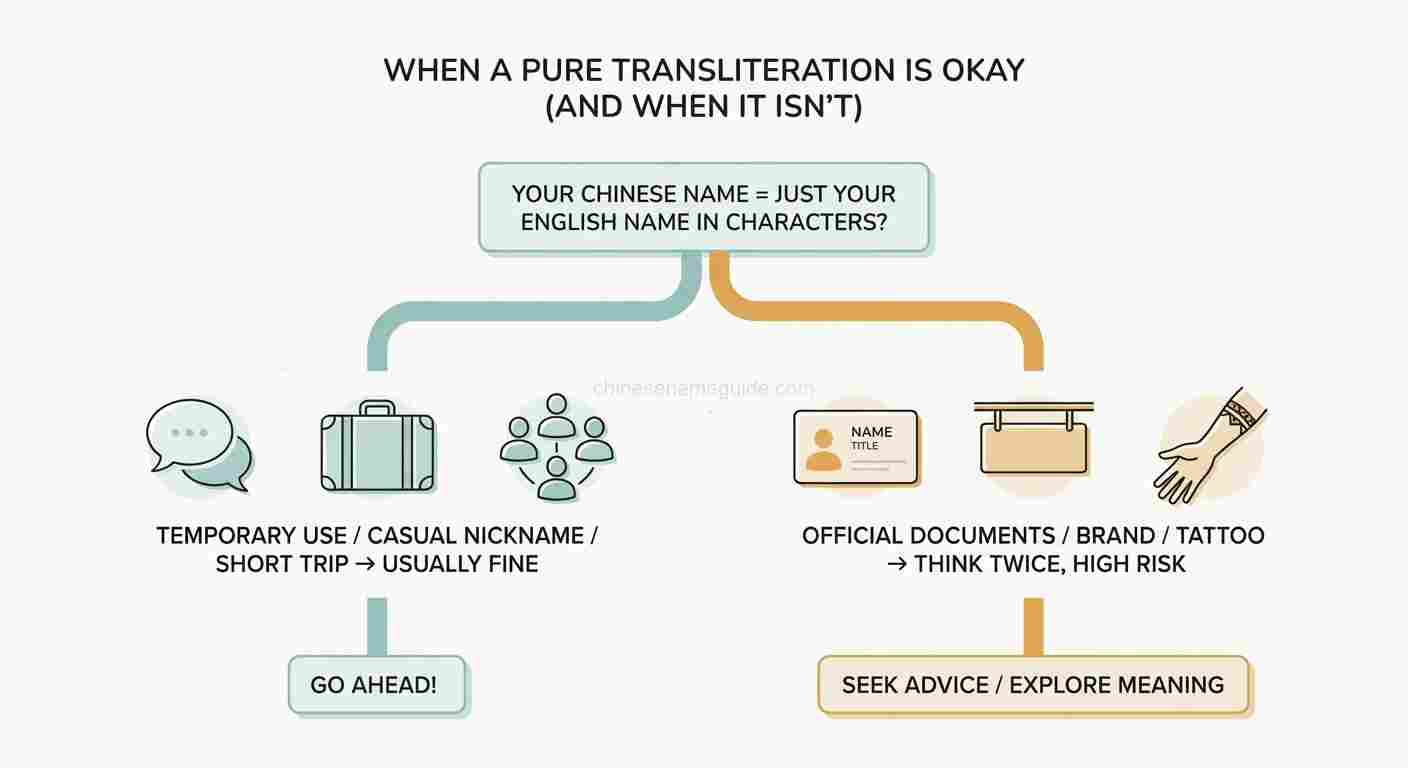
Again: always ask a native speaker to double-check before you commit.
How to Choose a Gender-Neutral Chinese Name (Step-by-Step)
Whether you’re nonbinary, just don’t want a strongly gendered name, or you’re naming a character, this process keeps you out of the obvious traps.
Step 1 – Decide your context
Be clear:
- Is this name for you (as a learner / immigrant / creator)?
- For a baby in a Chinese-speaking environment?
- For a fictional character or online persona?
The stricter the context (e.g., legal Chinese documents, school in Mainland China), the more you should follow ordinary naming patterns.
Step 2 – Pick a surname strategy
Options:
- Choose a very common surname: 王 Wáng, 李 Lǐ, 陈 Chén, 林 Lín, 张 Zhāng, etc.
- If you’re foreign, you can also:
- keep your Western surname for global use
- use a Chinese surname for the “Chinese side” of your identity (e.g., as a pen name)
If in doubt, a top 10 Chinese surname + neutral given name is the easiest, most natural choice.
Step 3 – Choose your vibe, not your gender
Instead of “male/female”, write down 3–5 adjectives:
- calm, analytical, cosmic, grounded, warm, mysterious, playful, etc.
Then focus on characters that fit those moods without being strongly gendered (see examples above).
Step 4 – Build from neutral characters
From sections 6.1 and 3.3, make your own mini-pool:
- e.g., 安, 晨, 林, 星, 雨, 江, 明, 宇, 思, 恒, 澄, 文
Play with combinations:
- Surname + 1 character: 王晨, 林星
- Surname + 2 characters: 王星辰, 陈雨森
- Just 2 characters as a mononym: 星澄, 雨森 (works for usernames / pen names)
Step 5 – Run a native-speaker check
This part is non-negotiable:
Ask at least one native speaker:
- “Does this sound like a real name?”
- “Does it feel male, female, or neutral to you?”
- “Any weird meanings, slang, or famous people with this exact name?”
You might hear answers like:
- “This is fine, but it sounds very feminine to me.”
- “Neutral, but slightly old-fashioned.”
- “Nice, modern, would not guess gender from this alone.”
Use that feedback to fine-tune.
Step 6 – Consider how people will address you
Even with a neutral name, other parts of Chinese still mark gender:
- 先生 (xiānshēng) – Mr.
- 女士 (nǚshì) – Ms.
- 小姐 (xiǎojiě) – Miss (context-sensitive, often avoided in Mainland)
If you’re nonbinary or just prefer neutral forms, you can nudge people to use titles like:
- 老师 (lǎoshī) – teacher (very common respectful address)
- 同学 (tóngxué) – classmate (in school settings)
- or just your full name / nickname with no title
Name neutrality is one piece of a larger language puzzle.
Final Thoughts
Because Chinese names are built from meaningful characters, not purely from sounds, gender in names is:
- partly semantic (flowers vs. dragons)
- partly cultural (what each generation considers “girly” or “manly”)
- partly phonetic (light vs. heavy sounds)
- and increasingly flexible in modern, urban Chinese communities.
The good news: this flexibility makes gender-neutral Chinese names very doable, especially if you:
- Stay in the nature / peace / wisdom / cosmos semantic zones
- Avoid strongly flower-coded or martial-hero characters
- Stick to ordinary surname + 1–2 character structures
- Always verify with native speakers
Do that, and you’ll end up with a name that:
- feels natural and respectable to Chinese readers
- doesn’t lock you into a gender box
- carries a meaning you actually like living with
Related Articles
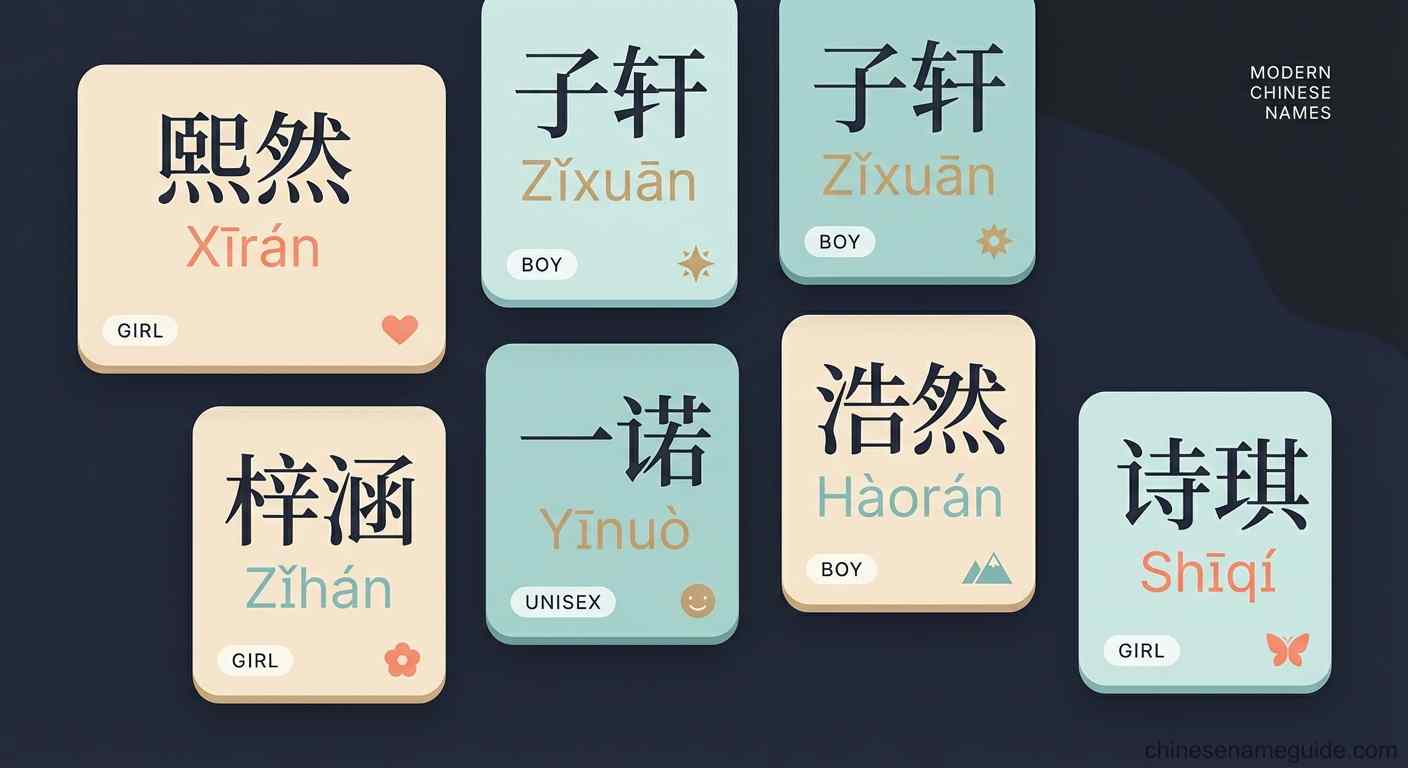
Modern Chinese Names: What Kids Are Actually Called Now
Forget Li Ming and Wang Wei. A ground-level look at what Chinese kids are really named today, what those names signal, and how to sound modern without sounding ridiculous.
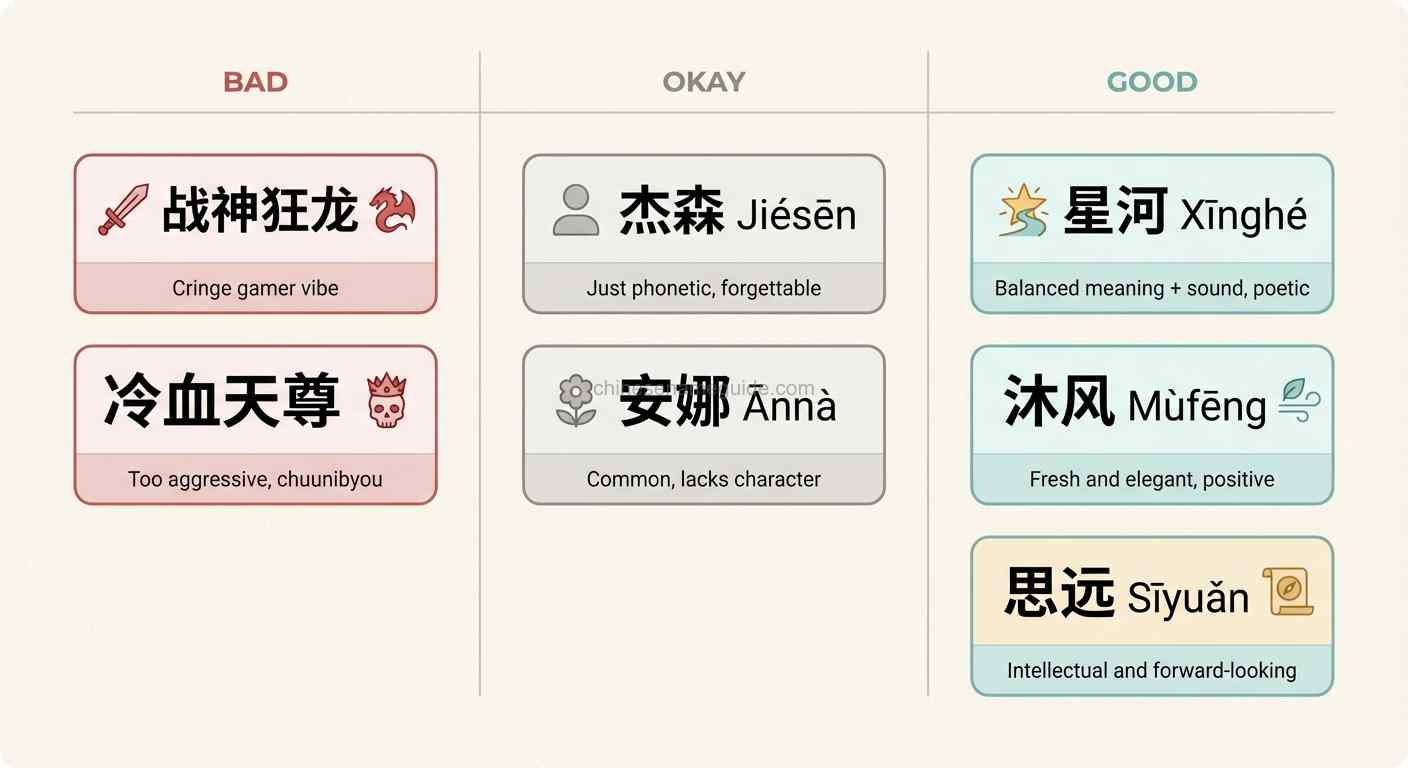
Why Most Chinese Name Generators Are Dangerous (Don't Get a Tattoo Yet!)
Before you tattoo a ‘cool Chinese name’ or launch a brand with it, read this. A brutally honest look at how most Chinese name generators actually work — and why they can quietly ruin your skin, your brand, or your reputation.