Get Traditional Chinese Fortune Readings Based on Your Name
How traditional Chinese name fortune readings work (strokes, elements, meanings) and how to use them wisely when choosing a Chinese name.
In many Chinese-speaking communities, your name is more than just a label.
It’s connected (at least in traditional belief) to your destiny, personality, and luck. So when parents choose a baby’s name, they don’t just think “does it sound nice?” — they may also check:
- the total number of strokes
- the name’s five elements balance (wood, fire, earth, metal, water)
- whether the combination is considered auspicious or inauspicious
Today, this has turned into popular “Chinese name fortune reading” tools — you type your name, click a button, and get a detailed report.
In this guide, we’ll explain:
- What a traditional Chinese name fortune reading actually is
- The main ideas behind it (stroke counts, five grids, elements)
- What a typical reading will tell you
- How to use these readings sensibly (without treating them as absolute truth)
⚠️ Important: This is cultural, traditional belief — not science.
Use it as a fun, meaningful perspective, not as a guarantee of your future.
What Is a Chinese Name Fortune Reading?
In Chinese, this is often called:
- 姓名学 (xìngmíng xué) – “name study”
- 姓名测试 / 姓名测算 – “name test / name calculation”
- 五格剖象法 – “five-grid analysis method” (a popular system)
The basic idea:
Your Chinese name (characters + stroke counts + meaning) forms a pattern.
This pattern can be analyzed to give traditional-style insights about your personality, luck, and life path.
A name reading usually mixes:
- Numerology – especially the total stroke counts of each character
- Five elements – wood, fire, earth, metal, water (五行 wǔxíng)
- Symbolic meaning of the characters
- Sometimes yin-yang balance and even your birth date (八字 bāzì)
Different systems use different formulas, but the logic is similar:
look at the structure of your name, then interpret it through traditional theories.
The Key Building Blocks: Strokes, Grids, Elements
1 Stroke count of each character
Each Chinese character has a fixed number of strokes in a given writing system (simplified or traditional).
Example:
- 王 (Wáng, a common surname) – 4 strokes
- 林 (Lín, “forest”) – 8 strokes
- 芳 (Fāng, “fragrant”) – 7 strokes
In name readings, these stroke counts are combined in different ways to form numbers that are considered more or less auspicious.
Note: Different fortune systems may use slightly different stroke-count standards, especially for traditional vs simplified characters.
2 Five “Grids” (五格) – a popular framework
One widely-used method is the Five Grids system:
- Heaven Grid (天格) – linked mainly to your family / background, often based on the surname
- Personality Grid (人格) – your core personality and inner self
- Earth Grid (地格) – about your foundation, early life, family support
- External Grid (外格) – your outer image, relationships with others
- Total Grid (总格) – overall life path, long-term luck
Each “grid” is a number derived from stroke counts. For example (simplifying a lot):
- Heaven = strokes of surname (+ 1)
- Personality = surname + first character of the given name
- Earth = given name characters (+ 1)
- External = Total – Personality
- Total = sum of all strokes in the full name
Then each number is checked against traditional interpretation tables:
- some numbers are considered very lucky (strong, stable, balanced)
- some are mixed (good early life, but tougher later; or vice versa)
- some are considered more challenging (frequent changes, health issues, unstable career, etc.)
You don’t need to memorize the formulas; just understand:
A name reading turns your characters into numbers, then reads those numbers as symbols.
3 Five Elements (五行) and balance
Many systems also map characters or stroke numbers to the Five Elements:
- Wood (木)
- Fire (火)
- Earth (土)
- Metal (金)
- Water (水)
For example:
- Certain stroke counts are associated with each element
- Some characters clearly belong to an element (e.g., lots of “fire” radicals = Fire element)
Once each part of your name is assigned an element, the reading looks at:
- which elements are strong or weak in your name
- whether they support each other or conflict
- how that matches your birth element chart, if the tool uses your birth date
The goal is often to balance the five elements:
not too much fire, not too little water, etc.
If something is missing, some people adjust their name to add that element.
What You Typically Get in a Name Fortune Report
Different tools and masters format it differently, but most reports include:
1 Basic info
- Your Chinese name (characters)
- Pinyin (romanization)
- Stroke counts of each character
- Which writing system is used (simplified or traditional)
2 “Grid” analysis
For each of the five grids:
- the number (e.g., 21, 15, 29…)
- a label (e.g., “upward luck”, “stable middle life”, “many changes”)
- short paragraphs describing:
- potential personality traits
- general career and relationship tendencies
- possible strengths/weaknesses
Most of this is written in very general terms, similar to horoscopes.
3 Five elements and balance
- which elements appear in your name
- whether your overall pattern is:
- fiery & energetic
- calm & watery
- grounded & earthy
- etc.
- sometimes, advice like:
- “Choose characters with more wood element to support growth.”
- “Avoid too much fire if it’s already overwhelming in your chart.”
4 Character-by-character meaning
Beyond the numbers, good readings also look at:
- the literal meaning of each character
- how they combine in real Chinese
- whether the name sounds:
- elegant, poetic, traditional, modern, flashy, old-fashioned…
This part is important because:
A numerically “lucky” name that feels awkward or low-quality in real Chinese is still not a good choice.
What Name Fortune Readings Can (and Can’t) Do
1 What they can do
- Give you a traditional cultural lens on your name
- Highlight possible themes:
- stability vs change
- introversion vs extroversion
- emphasis on family, career, or creativity
- Offer a structured way to compare different Chinese name options
They’re especially useful when:
- you’re choosing between a few similar names
- you enjoy Chinese culture & symbolism
- you want a name that “feels good” both aesthetically and symbolically
2 What they can’t do
- Predict your life with scientific accuracy
- Replace common sense about:
- skills, effort, health, relationships
- Tell you that “this name will make you rich” or “this name guarantees success”
Think of a name reading as:
A traditional narrative about your name, not a contract with the universe.
How to Use Name Fortune Readings Wisely
If you’re choosing a Chinese name (for yourself, your child, or your brand), here’s a reasonable approach:
Step 1 – Start with good language & sound
First, make sure your name:
- is easy to pronounce in Mandarin
- doesn’t sound like an obvious joke, slang, or bad word
- has positive or neutral meanings in the characters
This is more important than any numerology.
Step 2 – Shortlist a few options
Based on:
- sound (do you genuinely like how it sounds?)
- look (do you like how it looks as characters?)
- meaning (does it reflect something you care about?)
Pick 2–5 serious candidates.
Step 3 – Run fortune readings on your shortlist
Use a structured tool to:
- calculate the grids, elements, basic luck patterns
- highlight names with:
- extremely unbalanced patterns
- many traditionally “unfavorable” numbers
- maybe nudge you toward combinations that look more balanced
Don’t panic if one reading sounds dramatic — most texts are written in a very strong style.
Step 4 – Combine fortune results with common sense
Ask yourself:
- “If I didn’t know this fortune reading, which name would I prefer?”
- “Does the traditional analysis make me see new aspects of the name that I like/dislike?”
- “Is there a simple adjustment (swap one character) that keeps the style but improves the pattern?”
If a name looks and sounds great but has a “not perfect” score, it can still be totally fine.
If a name looks and sounds terrible but has a “lucky” score — don’t use it.
Step 5 – Treat it as culture, not pressure
Many Chinese people today do look at name readings… and then still:
- choose names they personally like
- accept that a name is only one small part of who they are
You can do the same.
If You Use an Online “Name Fortune Tool”
When you see a button like:
“Get traditional Chinese fortune reading for this name”
it usually means the tool will:
- Take your Chinese name (and sometimes your birth date)
- Convert the characters into stroke counts and elements
- Apply a traditional formula (like Five Grids)
- Generate an explanatory report
You can use that report to:
- compare two or three name options
- better understand how Chinese culture sees names
- enjoy an extra layer of meaning behind the characters you choose
Just remember:
The most important thing is still:
Do you feel good wearing this name every day?
If the answer is yes, and the traditional reading also feels broadly positive or balanced, you’ve probably found a good match.
Related Articles
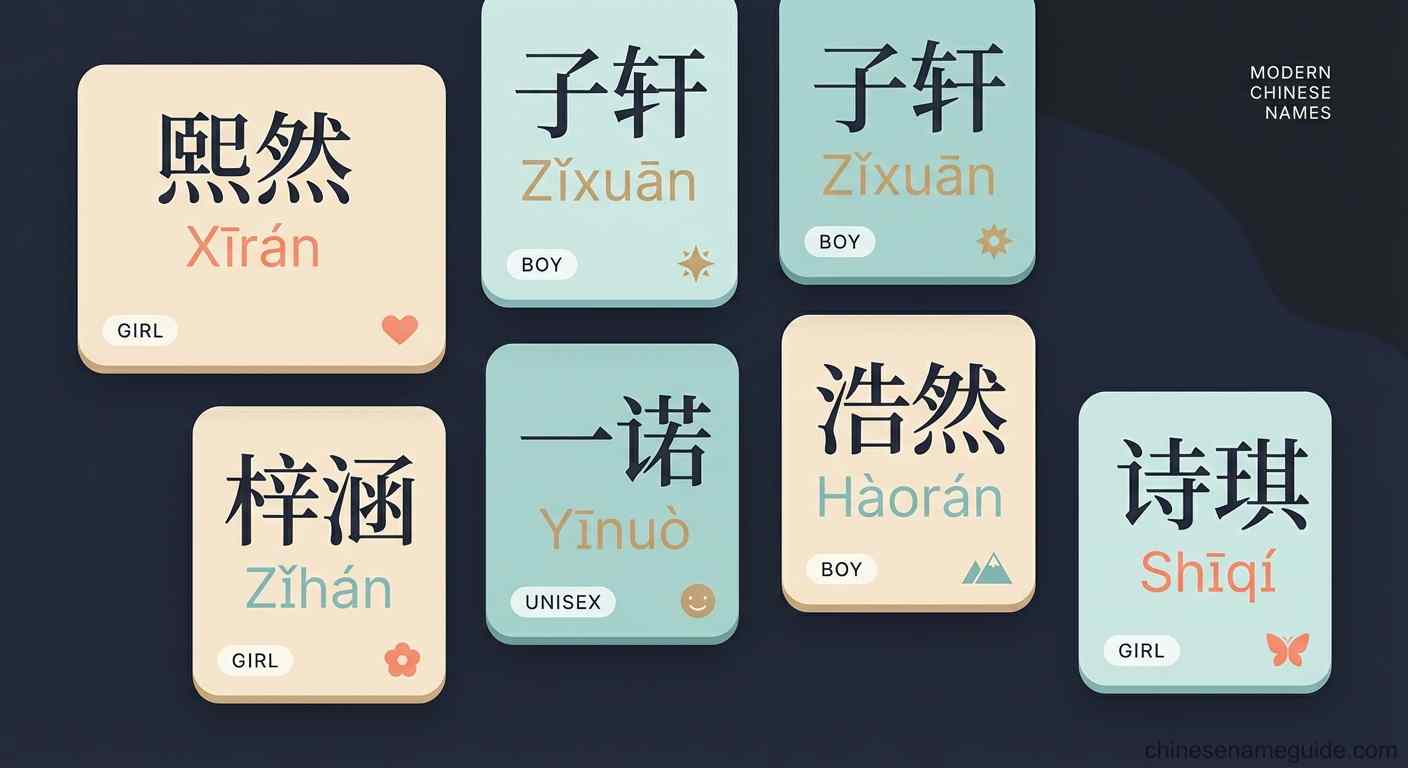
Modern Chinese Names: What Kids Are Actually Called Now
Forget Li Ming and Wang Wei. A ground-level look at what Chinese kids are really named today, what those names signal, and how to sound modern without sounding ridiculous.
Why Most Chinese Name Generators Are Dangerous (Don't Get a Tattoo Yet!)
Before you tattoo a ‘cool Chinese name’ or launch a brand with it, read this. A brutally honest look at how most Chinese name generators actually work — and why they can quietly ruin your skin, your brand, or your reputation.