Chinese Pen Names: How to Choose a Natural, Meaningful Chinese Pen Name
A practical guide for non-Chinese speakers who want a natural, culturally appropriate Chinese pen name (笔名) – with structure, strategies, and examples.
If you write, draw, stream, or publish for Chinese-speaking readers, you’ll eventually face a question:
“What should my Chinese pen name be?”
In Chinese, a pen name is called 笔名 (bǐmíng) or 艺名 (yìmíng) (for performers). Many Chinese authors, web novelists, manhua artists, and streamers use them.
As a non-Chinese speaker, picking a Chinese pen name can be exciting… and dangerous:
- It might look cool but sound awkward or childish to natives.
- It might accidentally mean something you really don’t want.
- Or it might just feel like a “try-hard fantasy username” instead of a real author name.
This guide walks you through how to choose a Chinese pen name that feels natural and meaningful:
- What a Chinese pen name actually is
- How Chinese names are structured (so you don’t break the rules by accident)
- Three main strategies for foreigners choosing Chinese pen names
- Step-by-step process to create your own
- Style examples (literary, modern, cute, gender-neutral, etc.)
- Common mistakes to avoid
- How to use your Chinese pen name alongside your English name
What Is a “Chinese Pen Name”?
In Chinese:
- 笔名 (bǐmíng) – literally “writing-name”, used by authors.
- 艺名 (yìmíng) – “art-name”, often used by actors, singers, streamers.
A Chinese pen name can be:
- very close to a real-life Chinese name, or
- more like a handle / nickname used online.
For a foreign creator, a Chinese pen name can help you:
- have a recognizable identity on Chinese platforms (WeChat, Bilibili, 小红书, 起点, etc.)
- connect culturally with Chinese readers
- make your name easier to remember, type, and search in Chinese
The key is: you want it to feel like “a name Chinese people might actually use”, not like random characters thrown together because they “look cool”.
Quick Crash Course: How Chinese Names Work
To create a natural pen name, you need to understand the basic structure.
1 Surname + Given Name
Most real Chinese names follow:
Surname (1 character) + Given name (1–2 characters)
Examples:
- 王小波 (Wáng Xiǎobō)
- 鲁迅 (Lǔ Xùn)
- 三毛 (Sān Máo) – pen name of author Chen Ping, feels playful/poetic
Some surnames have 2 characters (欧阳 Ōuyáng, 司马 Sīmǎ), but they’re less common. As a foreigner, picking a simple 1-character surname is usually safest.
2 Characters carry meaning
Each character is a mini-symbol with its own meaning and vibe:
- 星 (xīng) – star
- 林 (lín) – forest
- 安 (ān) – peace, safe
- 远 / 遠 (yuǎn) – far, distant
- 文 (wén) – writing, culture
Chinese readers read meaning into your name.
So “random pretty character + random pretty character” is not random to them.
3 Names vs nicknames vs internet IDs
- Some pen names are basically normal names (陈晨, 李想).
- Some are more like short phrases (南派三叔, 天蚕土豆 – famous webnovel authors).
- Some are obviously net IDs (e.g., with numbers, emojis, or very playful structures).
For most foreign writers, a good starting point is:
Pick something that resembles a real name, but that you are comfortable treating as a brand.
Three Main Strategies for Chinese Pen Names (as a Foreigner)
You don’t have to reinvent the wheel. Nearly all foreign Chinese pen names fall into one of these three patterns:
1 Sound-based (transliteration-ish)
You try to echo the sound of your English pen name with Chinese syllables.
Example idea:
- English pen name: Lena Gray
- Possible Chinese echo: 李娜 (Lǐ Nà) – Lena → Li-Na feeling (very common real name)
Or:
- English: Nova
- Chinese: 诺瓦 (Nuòwǎ) – not a typical real name, but normal-sounding syllables; can be used as a pen name or handle.
Pros:
- Easier for people to connect your English and Chinese identities
- Feels “named after yourself”, not a totally new persona
Cons:
- You might sacrifice some meaning depth
- If you’re careless, you can end up with weird or forced syllables
2 Meaning-based (semantic)
You base the Chinese name on the meaning / image / theme you want, not the sound of your English name.
Example:
- You write calm, reflective essays → want something like “quiet forest”
- Chinese pen name: 林默 (Lín Mò)
- 林 = forest
- 默 = silent
Another:
- You write space-themed sci-fi → want something like “star traveler”
- Chinese pen name: 星行 (Xīngxíng)
- 星 = star
- 行 = to travel / to move / to act
Pros:
- Very natural in Chinese, can be beautiful and poetic
- Name can directly reflect your writing style / themes
Cons:
- Connection to your English name is less obvious
- Requires more cultural sensitivity to avoid cheesy or strange combinations
3 Hybrid (sound + meaning)
You try to echo the sound a little and have a good meaning.
Example:
- English pen name: Aurora Vale → you like dawn, light, valley
- Chinese hybrid: 若曦 (Ruòxī) (famous example; literally “like dawn light”)
- 若 (ruò) gives a soft “ro” feeling
- 曦 (xī) = first rays of the morning sun
This might not line up perfectly phonetically, but emotionally it matches.
Pros:
- Keeps a loose bridge to your original name
- Gives you space to choose nice meanings
Cons:
- Harder to design well alone; easier if you work with a native speaker
Step-by-Step: How to Create Your Chinese Pen Name
Step 1 – Clarify your use case
Be brutally clear:
- Will you publish in Chinese (web novels, essays, comics)?
- Or is this mainly for social media / branding (e.g., a Chinese version of your profile)?
- Do you want it to feel like a real Chinese person’s name, or more like a cool internet ID?
If your main goal is serious publishing, stay closer to real-name structure.
If you’re going for streaming / gaming / social, you can be a bit more playful.
Step 2 – Decide on surname strategy
Options:
-
Pick a common surname
- Like 王 Wáng, 李 Lǐ, 陈 Chén, 林 Lín, 张 Zhāng
- Benefits: feels native, normal, and not pretentious
-
Use your own surname’s Chinese transliteration
- E.g., “Smith” → 史密斯 (Shǐmìsī) – but that’s 3 characters and feels foreign.
- You could extract a single character from such transliteration as a surname, but this should be checked carefully.
-
No surname (2-character pen name)
- Some creators just use 2 characters as a “mononym” online, e.g. 三月 (Sānyuè), 墨白 (Mòbái).
- This works fine for web platforms; less “real-name-like” but very common.
If you’re unsure, pick a common surname (option 1). It’s simple and safe.
Step 3 – Choose your “vibe”
Write a few keywords for your writing/persona:
- calm / healing / introspective
- sharp / dark / cyberpunk
- epic / mythic / historical
- cute / playful / light-hearted
Also note your gender vibe:
- Do you want the name to read as male, female, or gender-neutral to Chinese readers?
This will affect character choices. Some characters are perceived more feminine (e.g. 娜, 妍, 霏, 婷), some more masculine (e.g. 军, 刚, 勇, 轩 / 軒), and some neutral (星, 林, 安, 澄).
Step 4 – Build a small character pool
Collect 5–15 candidate characters around your themes:
Examples (just as inspiration):
- Nature:
- 林 (forest), 森 (deep forest), 山 (mountain), 川 (river), 星 (star), 月 (moon), 雨 (rain), 云 / 雲 (cloud), 风 / 風 (wind)
- Mood & values:
- 安 (peace), 静 / 靜 (quiet), 澈 (clear), 诚 / 誠 (honest), 勇 (brave), 澜 / 瀾 (waves), 岚 / 嵐 (mountain mist)
- Writing / art:
- 文 (writing/culture), 墨 (ink), 诗 / 詩 (poem), 画 / 畫 (painting), 韵 / 韻 (rhythm)
You’re not composing full names yet — just building LEGO bricks.
Step 5 – Combine and test
Now make combinations:
- If you have a surname:
- e.g., 王 + chosen characters → 王星澜, 王墨白, 王静安
- Without surname (mononym):
- 星澜, 墨白, 静安, 林岚
For each candidate:
- Say it aloud (with pinyin if you can).
- Check basic pronounceability for yourself.
- Look at it visually — does it feel balanced? (Too many ultra-complex characters together can look heavy.)
Step 6 – Native speaker check (non-negotiable)
Before you print it anywhere:
- Ask 1–2 native Chinese speakers:
- “Does this sound like a realistic pen name?”
- “Male / female / neutral vibe?”
- “Any weird meanings, slang, jokes, brand names, or memes attached to it?”
Be open to feedback like:
- “This is fine but feels like a xianxia webnovel character.”
- “This one sounds more like a brand than a person.”
- “This is actually a very famous person’s exact name.”
Adjust based on that.
Step 7 – Pair with your English pen name
Decide how you will present both:
- On a book / website:
- English Pen Name (中文笔名:Chinese name)
- On Chinese platforms:
- Chinese pen name as main display
- English pen name in your profile bio
The key is consistency: once you decide, stick to the same Chinese name across platforms.
Style Examples (Just Patterns, Not Recommendations to Copy)
⚠️ These are illustrative patterns, not advice to copy exact names.
Always check with a native speaker and make sure you’re not colliding with a major existing author.
1 Literary / essayist vibe
Typically softer, with nature or abstract characters.
- 林默 (Lín Mò) – forest + silent → quiet, reflective essayist
- 星河 (Xīnghé) – star + river (Milky Way) → poetic, dreamy
- 安澜 / 安瀾 (Ān Lán) – peace + gentle waves → calm but not dull
- 墨白 (Mò Bái) – ink + white → high-contrast, minimal, artistic
2 Fantasy / webnovel vibe
Slightly more dramatic; can tilt toward xianxia/cultivation style.
- 夜行 (Yèxíng) – “walks at night” → mysterious, dark protagonist author
- 影川 (Yǐngchuān) – shadow + river → flowing darkness
- 沧月 / 滄月 (Cāngyuè) – deep blue/ancient + moon → historical/fantasy feeling
If you’re not actually writing xianxia-style webnovels, don’t go too far down this road or it’ll feel mismatched.
3 Cute / light / slice-of-life vibe
Good for romance, slice of life, comics, healing content.
- 小柚 (Xiǎo Yòu) – “little pomelo” → very nickname-style, cute
- 糖夏 (Táng Xià) – sugar + summer → sweet, seasonal
- 星晴 (Xīngqíng) – star + clear sky → bright, cheerful
These work better if your content is also light and cute.
4 Gender-neutral / modern
Balanced, not strongly masculine or feminine.
- 星野 (Xīngyě) – star field → used in Japanese too, but works in Chinese; neutral
- 程远 / 程遠 (Chéng Yuǎn) – path + far → feels grounded and forward-looking
- 林舟 (Lín Zhōu) – forest + boat → simple, textured
Common Mistakes with Chinese Pen Names
-
Picking characters only by look, not meaning
- Some characters look cool but have bad or weird meanings.
- Always know what each character means and how it’s used in real words.
-
Using overly rare or archaic characters
- If people can’t even read your name, they probably won’t remember or search it.
- Rare characters are a nightmare on some input methods.
-
Mixing simplified and traditional randomly
- Don’t write one character in 简体 and another in 繁體 unless there is a very deliberate reason.
- Pick one writing system for your pen name and stick with it.
-
Unintentionally copying a famous person
- There are many well-known authors, actors, and brands; copying them can be confusing or awkward.
- Always search your chosen name on major Chinese platforms.
-
Making it too long or too phrase-like (unless that’s your brand)
- Names like “DestinyOfTheSilentMoonDragon” are fun for handles, not so much as serious pen names.
- If you go phrase-style (like some web authors do), be aware that it signals a very specific, casual genre.
-
Ignoring tone and sound completely
- Even if you don’t speak Chinese, your name will be spoken by readers.
- Some combinations sound tongue-twisty or clumsy; native feedback matters.
Using Your Chinese Pen Name in Practice
Once you’ve settled on a pen name:
-
On covers / title pages
- If publishing bilingually, you can show both names:
- English on top, Chinese below, or vice versa depending on primary market.
- If publishing bilingually, you can show both names:
-
On social media
- Chinese platforms: use Chinese pen name as main display name.
- Western platforms: keep English name as main; add Chinese pen name in bio if relevant.
-
In metadata / SEO
- Make sure both names are connected on your website so that:
- searching either name leads to you, not someone else.
- Make sure both names are connected on your website so that:
Most importantly: let it live. Over time, your Chinese pen name will feel less like a costume and more like a natural label for a specific side of your creative self.
Related Articles
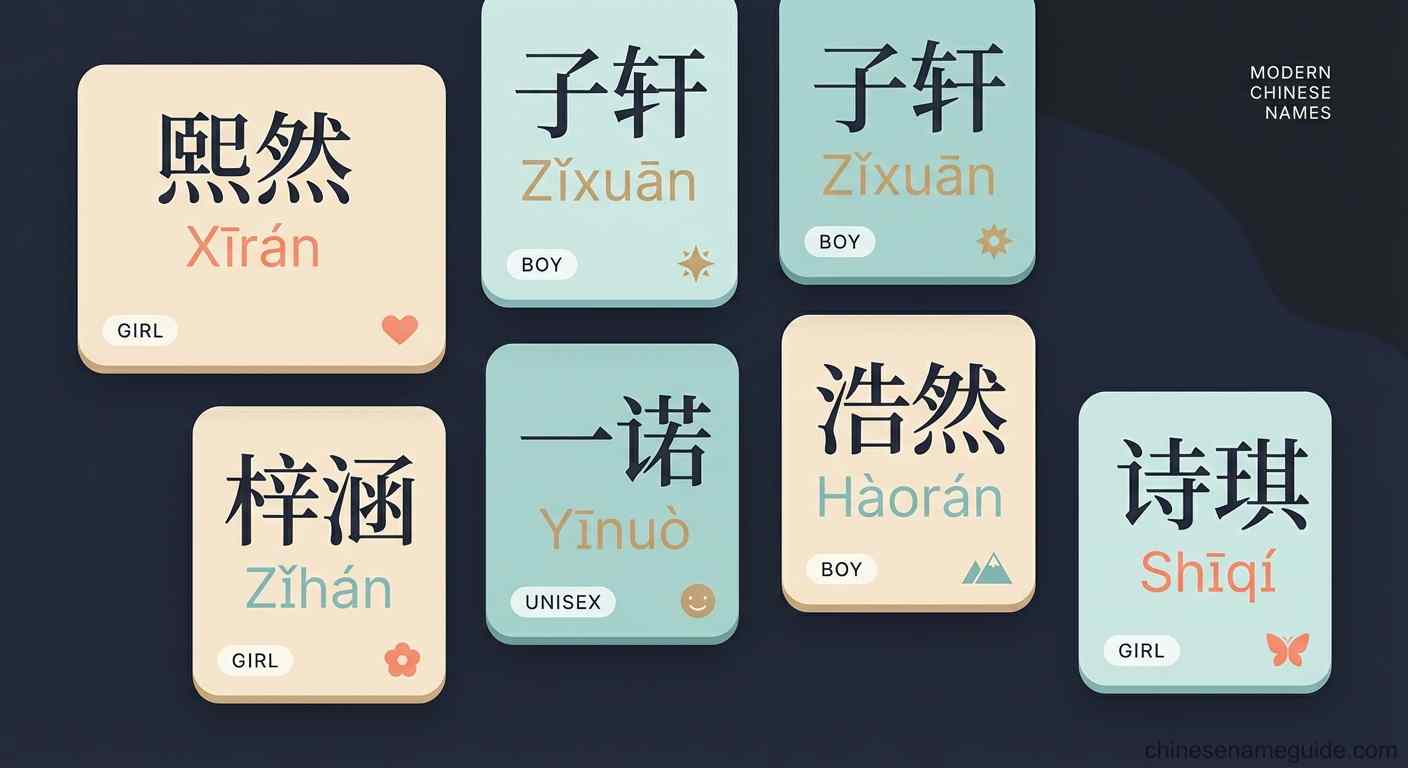
Modern Chinese Names: What Kids Are Actually Called Now
Forget Li Ming and Wang Wei. A ground-level look at what Chinese kids are really named today, what those names signal, and how to sound modern without sounding ridiculous.
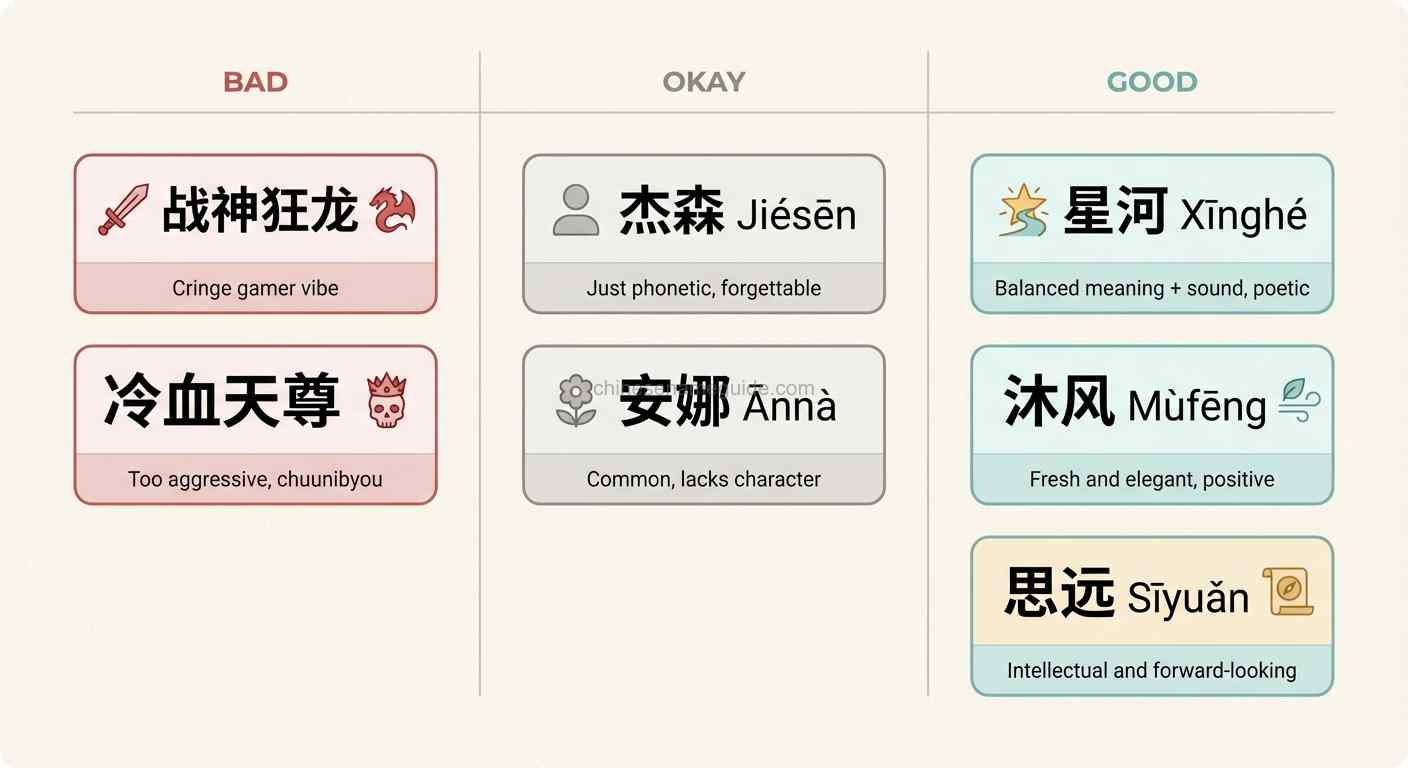
Why Most Chinese Name Generators Are Dangerous (Don't Get a Tattoo Yet!)
Before you tattoo a ‘cool Chinese name’ or launch a brand with it, read this. A brutally honest look at how most Chinese name generators actually work — and why they can quietly ruin your skin, your brand, or your reputation.