50 Cool Chinese Names for Tattoos (Verified Meanings)
A carefully checked list of 50 stylish Chinese names and words for tattoos, with characters, pinyin, and real meanings.
Chinese character tattoos look clean, minimal and powerful… when they’re correct.
When they’re not, you end up with horror stories like “soy sauce” instead of “bravery”, or a random jumble that no native speaker would ever use as a name.
This guide gives you 50 cool, checked options for Chinese tattoos:
- characters and names people actually use in Chinese
- pinyin (pronunciation guide)
- short, verified meanings and vibe notes
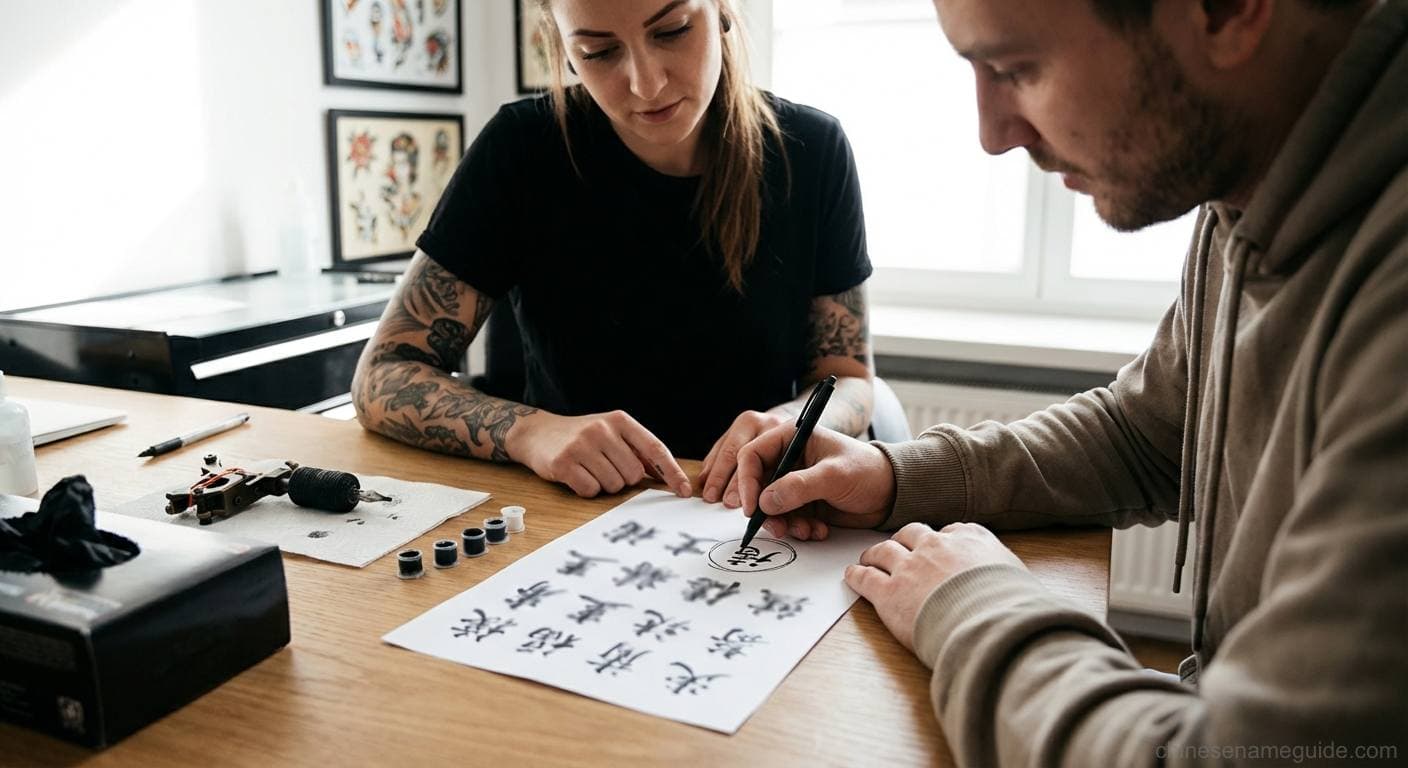
Important: Always double-check your final design with a native speaker + professional calligrapher/tattoo artist. This list is a starting point, not a substitute for that last safety check.
Before You Choose: How Chinese “Name” Tattoos Work
A few basics so you don’t accidentally ink something weird:
-
Characters vs. names vs. words
- A character = one Chinese symbol (e.g. 勇 “courage”).
- A word/phrase = 1–4+ characters combined (e.g. 自由 “freedom”).
- A name usually has a surname + 1–2 characters as a given name.
-
Simplified vs. Traditional
- Mainland China mainly uses simplified characters.
- Taiwan, Hong Kong, and many overseas communities use traditional.
- For tattoos, both are fine—just pick one style and stay consistent.
-
Script style
- You’ll see regular script (楷书), semi-cursive (行书) and more artistic styles.
- The meaning doesn’t change, only the visual style.
In the list below, I’ll write simplified / traditional where they differ.
If they’re the same in both, I’ll just write it once.
How to Read the List
For each idea you’ll see:
- Characters – what you’d actually tattoo
- Pinyin – how to say it (tones included)
- Literal meaning – what the words mean
- Vibe / usage – how it feels to native speakers (powerful, soft, poetic…)
You can:
- Tattoo one single character
- Combine 2–3 characters as a mini phrase
- Or use a full given name style (2 characters) on its own
50 Cool Chinese Names & Words for Tattoos
A. Single-Character “Power Names” (10)
These are bold, minimal and very popular as tattoos.
| # | Characters | Pinyin | Meaning & vibe |
|---|---|---|---|
| 1 | 勇 | yǒng | Courage, bravery. Strong, straightforward, very tattoo-friendly. |
| 2 | 忍 | rěn | Endurance, forbearance. Holding on through pain; very Zen but intense. |
| 3 | 梦 / 夢 | mèng | Dream. Idealism, ambition, inner world. Soft but powerful. |
| 4 | 龙 / 龍 | lóng | Dragon. Luck, power, nobility in Chinese culture. Very iconic. |
| 5 | 虎 | hǔ | Tiger. Strength, ferocity, protection. Great as an animal-totem tattoo. |
| 6 | 心 | xīn | Heart / mind. In Chinese it covers both emotion and “heart-mind”. |
| 7 | 静 | jìng | Stillness, tranquility. Calm, minimal, great on neck or wrist. |
| 8 | 乐 / 樂 | lè | Joy. Happiness, delight, also “music” in some contexts. |
| 9 | 光 | guāng | Light. Illumination, hope, guidance. Works alone or in phrases. |
| 10 | 义 / 義 | yì | Righteousness, justice, loyalty. Very heroic, old-school vibe. |
B. Two-Character Virtues & Life Mottos (15)
Short words that work both as concepts and given-name elements.
| # | Characters (simp. / trad.) | Pinyin | Meaning & vibe |
|---|---|---|---|
| 11 | 自由 | zìyóu | Freedom, liberty. Independent spirit, free soul. |
| 12 | 勇气 / 勇氣 | yǒngqì | Courage, guts. Emotional and physical bravery. |
| 13 | 坚强 / 堅強 | jiānqiáng | Strong, resilient. Inner toughness, not just muscles. |
| 14 | 希望 | xīwàng | Hope. Looking forward, light in the future. |
| 15 | 平和 | pínghé | Peaceful, gentle. Calm, non-aggressive personality. |
| 16 | 信念 | xìnniàn | Belief, conviction. Strong inner faith (not tied to one religion). |
| 17 | 成长 / 成長 | chéngzhǎng | Growth. Personal development, leveling up. |
| 18 | 觉醒 / 覺醒 | juéxǐng | Awakening. Realization, spiritual or mental awakening. |
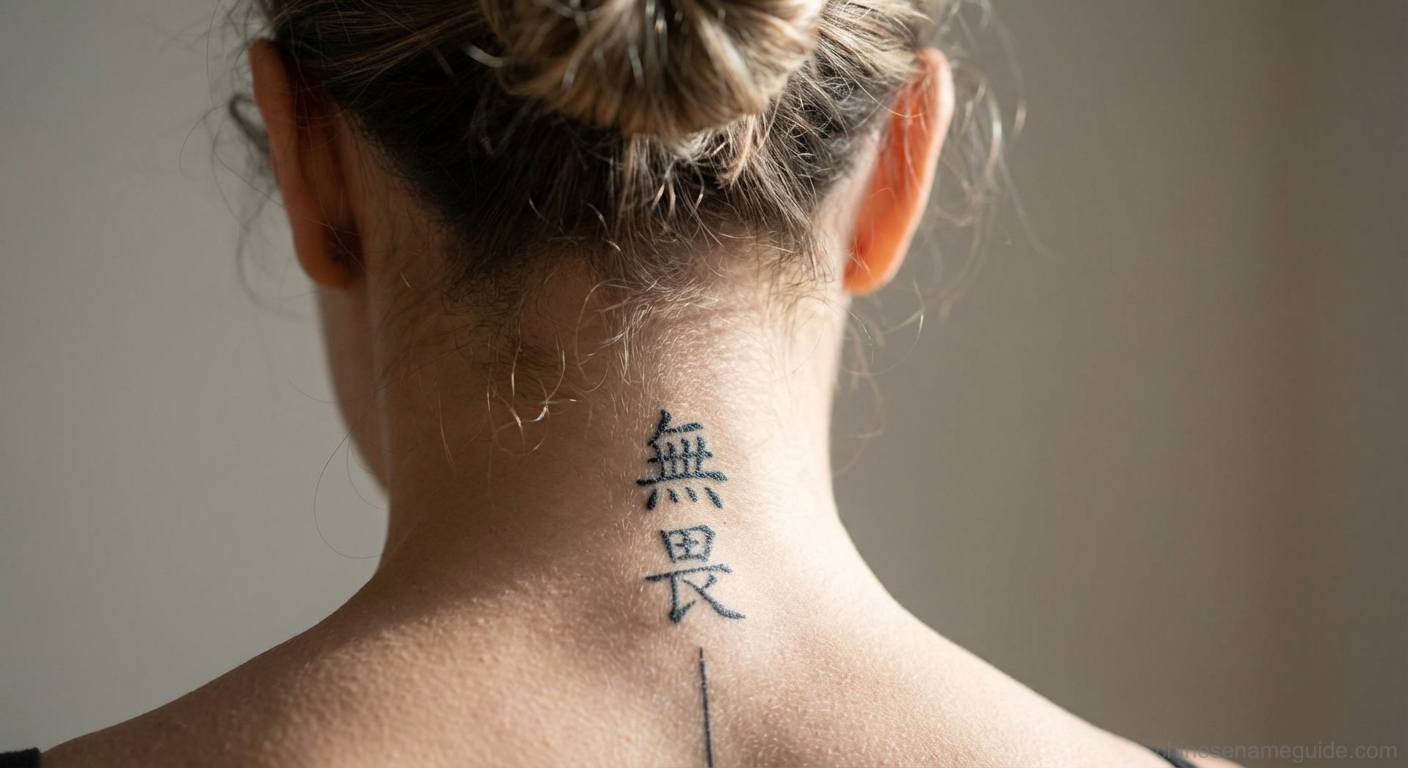
| 19 | 无畏 / 無畏 | wúwèi | Fearless. “Without fear.” (⚠️ Different from 道家 “无为 / 無為”, non-action.) |
| 20 | 包容 | bāoróng | Tolerance, acceptance. Big heart, inclusive attitude. |
| 21 | 坚忍 / 堅忍 | jiānrěn | Firm & enduring. Stoic, can take hardship and keep going. |
| 22 | 自省 | zìxǐng | Self-reflection. Looking inward, knowing yourself. |
| 23 | 善良 | shànliáng | Kindhearted. Moral goodness + gentle personality. |
| 24 | 热爱 / 熱愛 | rè’ài | Deep love, passion. Strong affection for someone or something. |
| 25 | 梦想 / 夢想 | mèngxiǎng | Dreams, aspirations. “The dreams you chase in life.” |
C. Nature & Element Symbols (10)
Great if you connect more with nature than abstract words.
| # | Characters (simp. / trad.) | Pinyin | Meaning & vibe |
|---|---|---|---|
| 26 | 山 | shān | Mountain. Stability, calm power, long-term patience. |
| 27 | 海 | hǎi | Sea, ocean. Depth, vastness, emotional intensity. |
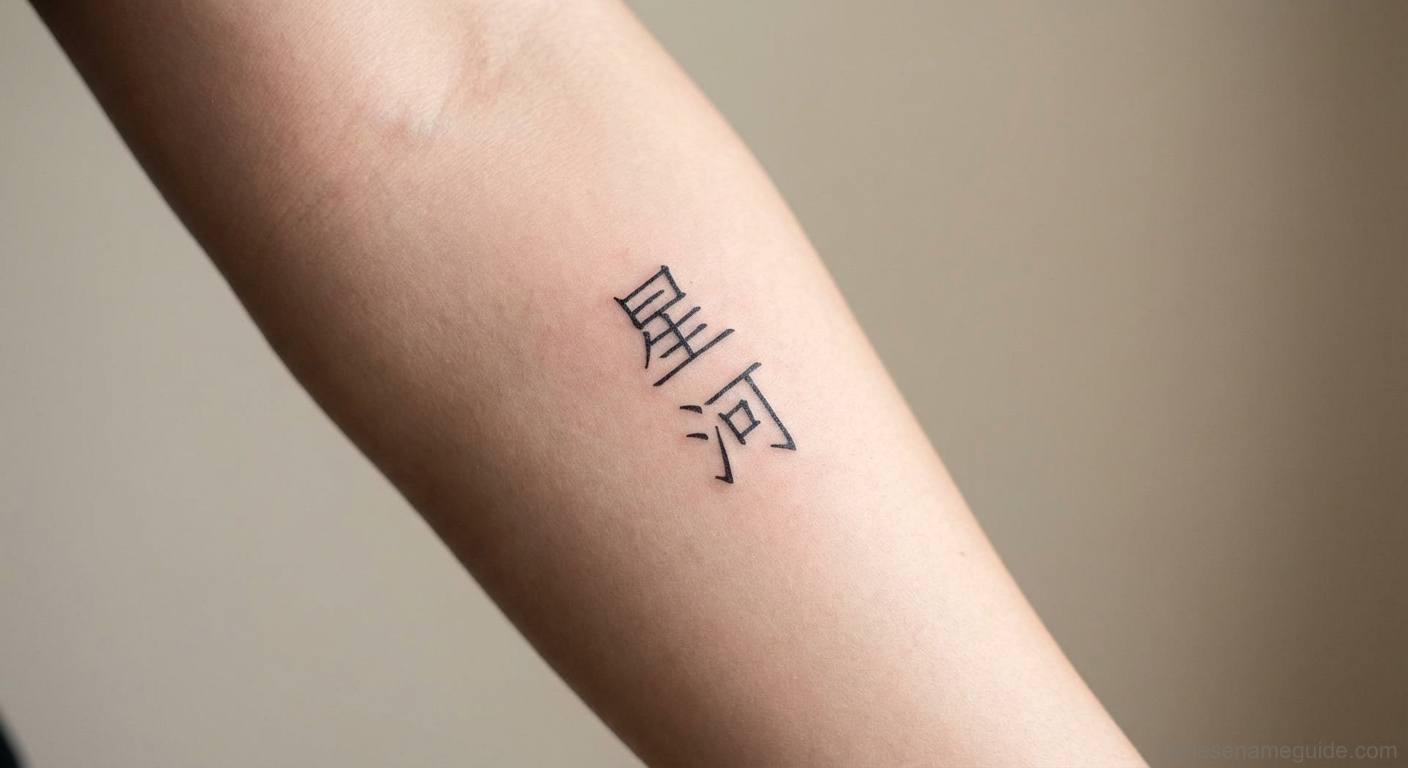
| 28 | 星 | xīng | Star. Guidance, distant dreams, cosmic feel. |
| 29 | 月 | yuè | Moon. Soft light, cycles, intuition. |
| 30 | 云 / 雲 | yún | Cloud. Change, flow, lightness. Can be very poetic. |
| 31 | 风 / 風 | fēng | Wind. Freedom, movement, unseen power. |
| 32 | 森 | sēn | Forest. Three “tree” radicals; deep nature, hidden world. |
| 33 | 花 | huā | Flower. Beauty, impermanence, life in bloom. |
| 34 | 雨 | yǔ | Rain. Renewal, cleansing, melancholy beauty. |
| 35 | 火 | huǒ | Fire. Passion, transformation, burning energy. |
You can also combine these, e.g.:
- 海风 / 海風 hǎifēng – sea wind
- 星海 xīnghǎi – sea of stars
Ask a native speaker before inventing combinations, just to avoid odd meanings.
D. Poetic Given-Name Style (10)
These look and feel like real Chinese given names. You can tattoo just the two-character given name, or full name if you add a surname.
| # | Characters | Pinyin | Meaning & vibe |
|---|---|---|---|
| 36 | 子轩 / 子軒 | Zǐxuān | “Refined, upward-looking spirit.” Very common modern male/unisex name. |
| 37 | 诗涵 / 詩涵 | Shīhán | “Immersed in poetry.” Elegant, artistic, feminine-leaning. |
| 38 | 宇辰 | Yǔchén | “Universe + stars / time.” Cosmic, modern, unisex. |
| 39 | 静雅 / 靜雅 | Jìngyǎ | “Calm and elegant.” Gentle, classy, more feminine. |
| 40 | 若曦 | Ruòxī | “Like the first light of dawn.” Romantic, soft, literary. |
| 41 | 天乐 / 天樂 | Tiānlè | “Heavenly joy / sky-music.” Bright, optimistic, unisex. |
| 42 | 星辰 | Xīngchén | “Stars and heavenly bodies.” Very poetic, gender-neutral. |
| 43 | 子瑜 | Zǐyú | “Child of fine jade.” Pure, precious; used for all genders. |
| 44 | 雨桐 | Yǔtóng | “Rain + paulownia tree.” Popular feminine name, quiet strength. |
| 45 | 长风 / 長風 | Chángfēng | “Long wind.” Journey, freedom; heroic, slightly masculine. |
💡 If you want a full Chinese name, put a surname you like in front, e.g.
王星辰 Wáng Xīngchén, 李子瑜 Lǐ Zǐyú, 陈长风 Chén Chángfēng.
E. Short Poetic Phrases (5)
These are 3–4 characters long. Best done in a clean vertical line or balanced horizontal layout.
| # | Characters (simp. / trad.) | Pinyin | Meaning & vibe |
|---|---|---|---|
| 46 | 自在如风 / 自在如風 | zìzài rú fēng | “Free like the wind.” Relaxed, unbound lifestyle. |
| 47 | 心如止水 | xīn rú zhǐ shuǐ | “Heart like still water.” Deep inner calm, emotional stability. |
| 48 | 永不放弃 / 永不放棄 | yǒng bù fàngqì | “Never give up.” Very direct, motivational. |
| 49 | 活在当下 / 活在當下 | huó zài dāngxià | “Live in the present.” Mindfulness, enjoying the moment. |
| 50 | 探索无尽 / 探索無盡 | tànsuǒ wújìn | “Exploration without end.” Curiosity, lifelong learning. |
How to Pick the Right One (And Avoid Regrets)
A few practical rules so your Chinese tattoo still feels right in 20 years.
1 Match the meaning to your real story
Ask yourself:
- “Is this something I already live, or something I truly want to grow into?”
- “Would I still like this meaning if no one else could read it?”
If “yes”, you’re on safer ground.
2 Decide on style: single character, word, or name?
- Want minimal, graphic design → single character (勇, 静, 龙).
- Want a clear concept → 2–3 characters (自由, 觉醒, 永不放弃).
- Want something more personal & name-like → a two-character given name (星辰, 子瑜, 雨桐).
3 Simplified vs. Traditional vs. Calligraphy
- Ask your artist which style they can execute cleanly.
- If you like Taiwan/HK/Japanese aesthetics, you’ll probably prefer traditional forms.
- If you like a more modern, clean look, simplified can work very well.
- For calligraphy styles (brush script, semi-cursive), make sure the artist has real references, not just a random font.
4 Always get a native check
Before you let the needle touch your skin:
- Show the exact design (characters, order, style) to at least one native Chinese speaker.
- Ask: “Does this say what I think it says? Does it feel natural? Any weird associations?”
- If you’re using a given-name style (like 若曦, 星辰), ask if it sounds like a real name and what gender vibe it gives.
Never rely only on auto-translation or random Pinterest images.
A 5-minute check can save you a lifetime of explaining a mistake.
Want to Pronounce Your Tattoo Correctly?
If you’re going to wear Chinese on your body, it’s nice to be able to say it properly, too.
- Learn the tones for your chosen word or name.
- Practice saying it as syllables with tones, not English stress.
You can use our separate guide on Chinese pronunciation for beginners to get comfortable with pinyin and tones before you finalize your design.
Final Thoughts
Chinese characters are beautiful, compact containers of meaning. One symbol can hold:
- a value you live by
- a story you survived
- a promise to your future self
Use this list of 50 ideas as a carefully checked menu, then:
- Narrow it down to 3–5 favorites.
- Test how they feel over a few weeks.
- Confirm with a native speaker + a good tattoo artist.
Do that, and your Chinese tattoo won’t just look cool—it will actually say exactly what you mean.
Related Articles
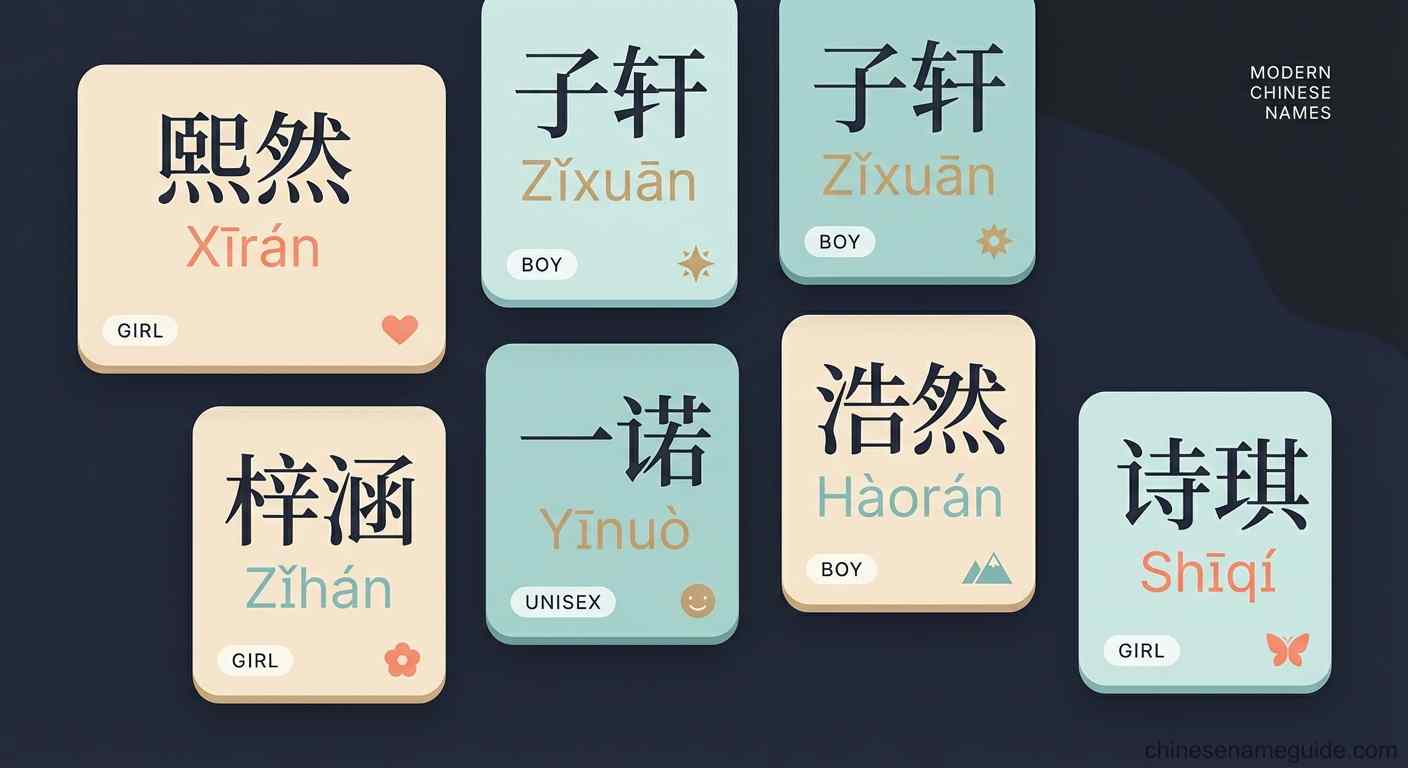
Modern Chinese Names: What Kids Are Actually Called Now
Forget Li Ming and Wang Wei. A ground-level look at what Chinese kids are really named today, what those names signal, and how to sound modern without sounding ridiculous.
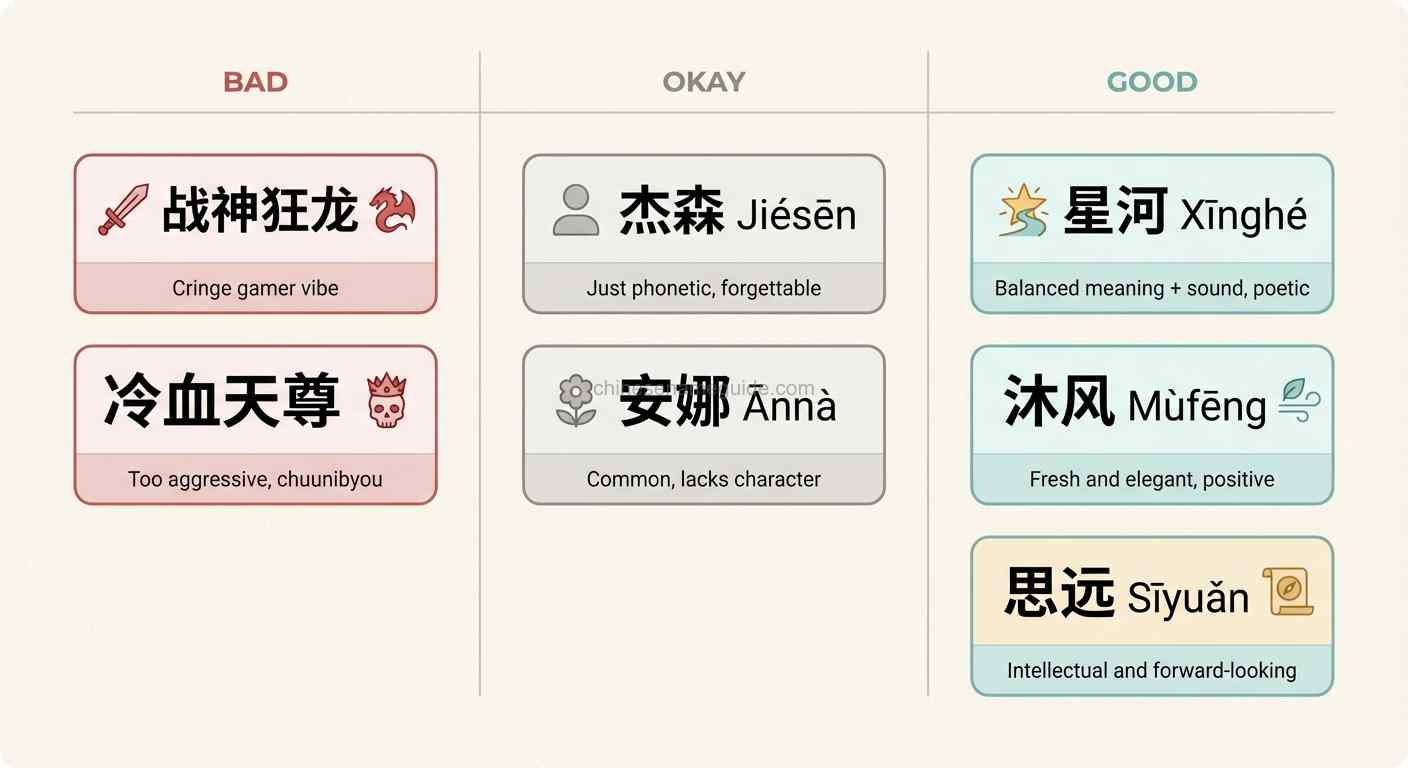
Why Most Chinese Name Generators Are Dangerous (Don't Get a Tattoo Yet!)
Before you tattoo a ‘cool Chinese name’ or launch a brand with it, read this. A brutally honest look at how most Chinese name generators actually work — and why they can quietly ruin your skin, your brand, or your reputation.