How to Choose a Pen Name (That Actually Works in Real Life & Online)
A practical, step-by-step guide to creating a pen name you can live with for years – from novels to blogs to Chinese names.
J.K. Rowling. Mark Twain. George Orwell. Dr. Seuss.
All of them wrote under pen names.
If you’re writing fiction, blogging, drawing comics, posting fanfic, or building an online persona, at some point you’ll ask:
“Should I use a pen name? And if yes, which one?”
This guide walks you through how to choose a pen name that:
- fits your genre and audience
- works on book covers and social media
- avoids legal/SEO headaches
- doesn’t make native speakers quietly laugh if you pick a foreign-language name (like Chinese or Japanese)
Why Writers Use Pen Names
Before naming yourself, it helps to be clear why you want a pen name. Different reasons → different constraints.
Common reasons:
-
Privacy & safety
- You want to separate your writing from your day job / family name.
- You write about sensitive topics, or in genres your real-life community may not accept.
-
Branding & genre fit
- You write romance but your real name sounds like a tax lawyer.
- You write hard sci-fi, crime, or epic fantasy and want a name that matches the vibe.
-
Practicality
- Your real name is very common or very hard to spell.
- There’s already a famous author with your exact name.
-
Language / cultural reasons
- You write in English but your real name is difficult for English readers.
- You want a Chinese pen name for publishing or social media in Chinese.
-
Multiple identities / genres
- One name for kidlit, another for horror.
- One for non-fiction, another for spicy romance.
Write down your reasons. They will guide every decision in the rest of this article.
What Makes a Good Pen Name?
A good pen name is not just “cool” — it’s usable.
Here are 6 qualities to aim for:
-
Pronounceable
- Readers should feel confident saying it out loud.
- Test: can someone pronounce it correctly just by reading it?
-
Spellable
- If people hear it on a podcast, can they type it into a search bar without pain?
- Avoid names with too many unusual letter combinations.
-
Rememberable
- Shorter is usually better.
- Distinct rhythm helps: two- or three-part names like “Neil Gaiman”, “Maggie Stiefvater”.
-
Searchable
- Not completely swallowed by other results.
- Ideally, no major author already using the same name in your language/genre.
-
Genre-aligned
- Does it feel like someone who writes your kind of work?
- “Cute & cozy”, “sharp & noir”, “mythic & epic” – names carry vibes.
-
Emotionally comfortable
- You should not feel embarrassed saying “I’m X” at a conference.
- You can imagine seeing it on a book spine without cringing.
If a name scores high on all six, you’ve got a strong candidate.
Three Main Pen Name Strategies
1 Modified real name
You keep a connection to your real identity, but tweak it:
- use your middle name as surname
- change the order of name parts
- abbreviate: J.R.R., C.S., E.L.
- translate your name into another language (carefully)
Pros
- Feels familiar, easier to sign and respond to
- If you get famous, friends won’t be that confused
- Paperwork (payments, contracts) can be easier to manage
Cons
- Less privacy
- May still clash with certain genres or languages
Example pattern:
- Real name: Alexandra Maria Johnson
- Pen names: Alex M. Johns, A.M. Reyes (if you use a family name), Lexa M. Carter
2 Completely invented Western-style name
You create a brand-new name in the same language you write in.
- Pick first name + last name that fits your genre
- Maybe borrow from roots (Nicknames, family tree, your city, favorite author)
Pros
- Strong separation between you and your persona
- Lots of creative freedom
- Good for “full rebranding”
Cons
- More work to check availability, conflicts, domain handles
- Might feel “fake” until you grow into it
Example patterns:
- Romance: softer, flowing names – Lila Hart, Isabel Rose, Maya Winters
- Thriller: sharper, punchier names – Jack Cross, Eva Black, Cole Mercer
- SFF: flexible – could be poetic (Aurora Vale), blunt (Gideon Frost), or neutral.
3 Foreign-language or symbolic pen name (e.g., Chinese)
Some writers choose names in another language:
- Japanese-style pen names
- Chinese names written in hanzi (漢字)
- Latin phrases, mythological references
For Chinese pen names specifically, you might:
- want a Chinese identity for publishing on Chinese platforms
- like the visual aesthetics of characters
- want an extra layer of meaning behind the name
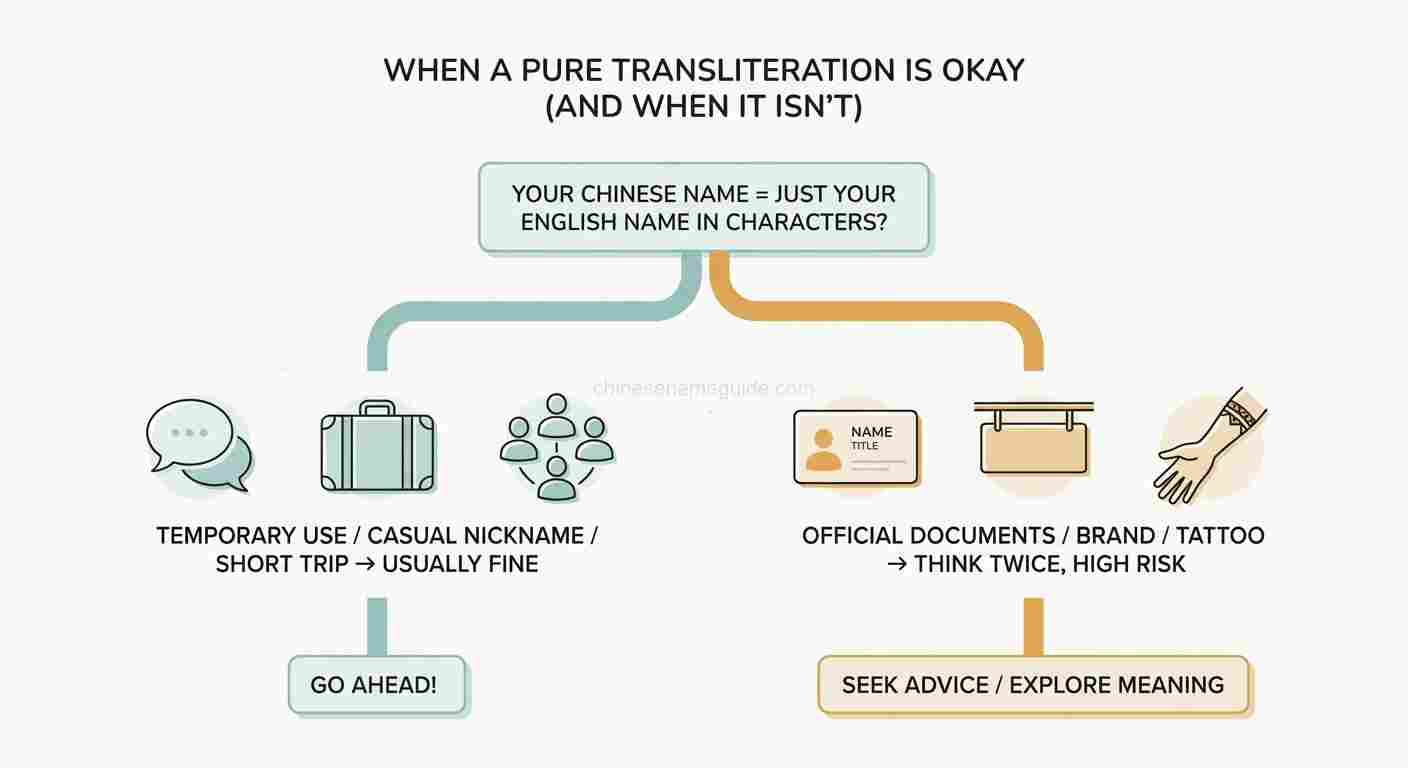
Warning:
Foreign-language names are easy to get wrong. Native speakers will notice weird or awkward choices immediately — or interpret your name very differently than you think.
If you choose this path, make sure you:
- ask a native speaker to check it
- understand the literal meaning of each character/word
- avoid choosing characters just because they “look cool” in tattoo fonts
Step-by-Step: How to Create Your Pen Name
Here’s a practical workflow you can follow in an afternoon (or two).
Step 1 – Define your persona & genre
Write down:
- Your genre(s): romance, fantasy, lit fic, tech blog, memoir, etc.
- Your audience: teens, adults, niche geeks, general mass market
- The emotional tone: dark / cosy / epic / sarcastic / gentle
Imagine your future book cover or website header. What name looks right there?
Step 2 – Decide your language & style
- Will your name be:
- in the same language you write in?
- in another language (Chinese, Japanese, etc.)?
- a hybrid, e.g., English + Chinese pen name, depending on context?
Be realistic about:
- Whether your readers can pronounce it
- Where your work will mainly live: Amazon? Webtoon? Chinese platforms?
Step 3 – Build a word bank
Collect:
- Given names you already like
- Surnames you find appealing (from family, maps, old records, random name sites)
- Words with meanings you resonate with (light, storm, river, dawn, ink, shadow…)
For Chinese pen names, also collect:
- Characters you like the meaning of (星 star, 林 forest, 安 peace…)
- Surname candidates (王 Wáng, 李 Lǐ, 陈 Chén, etc.)
- Example Chinese author names you admire
The goal here is raw material, not perfection.
Step 4 – Start combining (and say them out loud)
Mix and match:
- First name + last name
- Initials + surname
- For Chinese: Surname + 1–2 character given name
As you generate candidates:
- Speak them aloud several times.
- Write them as they would appear:
- on a book cover
- in a website header
- in a social media handle
Cross off anything that makes you hesitate.
Step 5 – Check collisions & problems
For your top candidates:
- Search on major platforms:
- Google / Bing
- Amazon or Goodreads (for authors)
- social media (Twitter/X, Instagram, etc.)
- Look for:
- existing authors with the same or very similar names
- strong brand collisions (you don’t want to be mistaken for a huge company)
- weird or negative associations
For Chinese names:
- Ask native speakers:
- “Does this sound natural?”
- “Any strange or unfortunate meanings / associations?”
- Check you’re not picking:
- a name that is overly melodramatic, like a fantasy protagonist
- a name that sounds like a joke or meme in Chinese internet culture
Step 6 – Live with the finalists
Pick 2–3 finalists and:
- change your display name in low-risk places (private Discord, small communities)
- sign a few emails or messages with it
- imagine being introduced on stage:
“Please welcome, [Your Pen Name].”
Which one feels like someone you can inhabit?
Step 7 – Commit, then standardize
Once you choose:
- Use the same form across platforms:
- Books / website / newsletter / socials
- If you need different pen names for different genres:
- keep them distinct instead of tiny variations
- Document the connection privately:
- for contracts, taxes, payments, etc.
Extra Tips for Chinese Pen Names (if you want one)
If your audience includes Chinese readers — or you publish on Chinese platforms — you might want a Chinese pen name alongside your English one.
Basic principles:
-
Follow natural Chinese naming patterns
- Usually: 1-character surname + 1–2-character given name
- Example: 王安石 Wáng Ānshí, 鲁迅 Lǔ Xùn, 金庸 Jīn Yǒng
-
Meaning matters a lot
- Each character has its own meaning and cultural feel.
- Common positive themes:
- nature: 林 (forest), 山 (mountain), 星 (star), 雨 (rain)
- virtues: 诚 (honest), 勇 (brave), 智 (wise), 安 (peace)
- literature/art: 书 (book), 文 (literary), 雅 (elegant), 韵 (rhythm)
-
Avoid “Google Translate names”
- Directly translating your English name word-by-word rarely works for pen names.
- Better to pick a conceptually related Chinese name:
- If your English name is “River”, you might choose a name associated with water, flow, or journeys — not necessarily the literal word for “river”.
-
Check: masculinity/femininity, era, and vibe
- Some characters are strongly masculine or feminine.
- Others feel very modern vs. heavily old-fashioned.
- Native-speaker feedback is crucial here.
-
Pair it with your English pen name
- On your site / bio, you can write:
- English pen name + (中文笔名:Chinese name)
- This helps readers connect both identities.
- On your site / bio, you can write:
If you already have a shortlist of English and Chinese name ideas, you can treat them as two layers of the same “brand”:
- English side for global distribution
- Chinese side for Chinese-language platforms and readers
Common Mistakes to Avoid
-
Choosing a joke name you quickly regret
- It’s fun at 2 a.m., less fun on a contract or long-term project.
-
Being too attached to “deep meaning”
- A beautiful symbolic meaning can be nice, but:
- if nobody can spell or say it, that’s a problem
- simple and clear often wins in practice
- A beautiful symbolic meaning can be nice, but:
-
Ignoring existing authors with the same name
- This can cause confusion and sometimes legal issues.
- Always search before committing.
-
Picking a foreign-language name you don’t fully understand
- Especially for Chinese / Japanese kanji:
- some characters have negative or awkward connotations
- some combinations feel like fantasy anime characters, not real authors
- Especially for Chinese / Japanese kanji:
-
Constantly changing your name
- Rebranding once is fine.
- Rebranding every few months kills trust and recognition.
Final Thoughts
A pen name is:
- part mask (protection and freedom)
- part brand (how readers remember and search for you)
- part promise (what kind of stories or ideas you bring)
You don’t need the “perfect” name on day one. You just need a name that is:
- usable
- honest to your work’s tone
- something you can grow into
Later, you can always refine. Many authors have changed or shortened their pen names mid-career; what matters is that the name serves your writing, not the other way around.
Related Articles
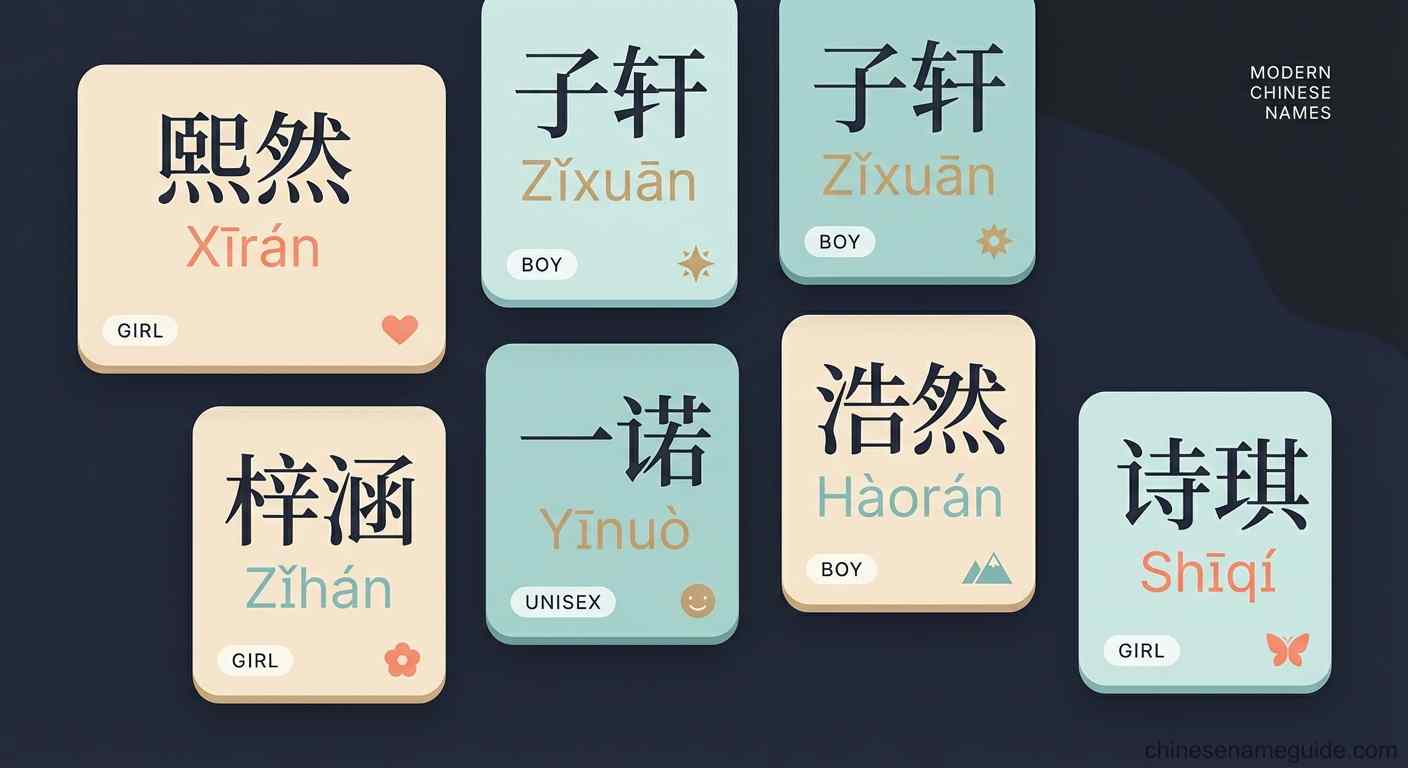
Modern Chinese Names: What Kids Are Actually Called Now
Forget Li Ming and Wang Wei. A ground-level look at what Chinese kids are really named today, what those names signal, and how to sound modern without sounding ridiculous.
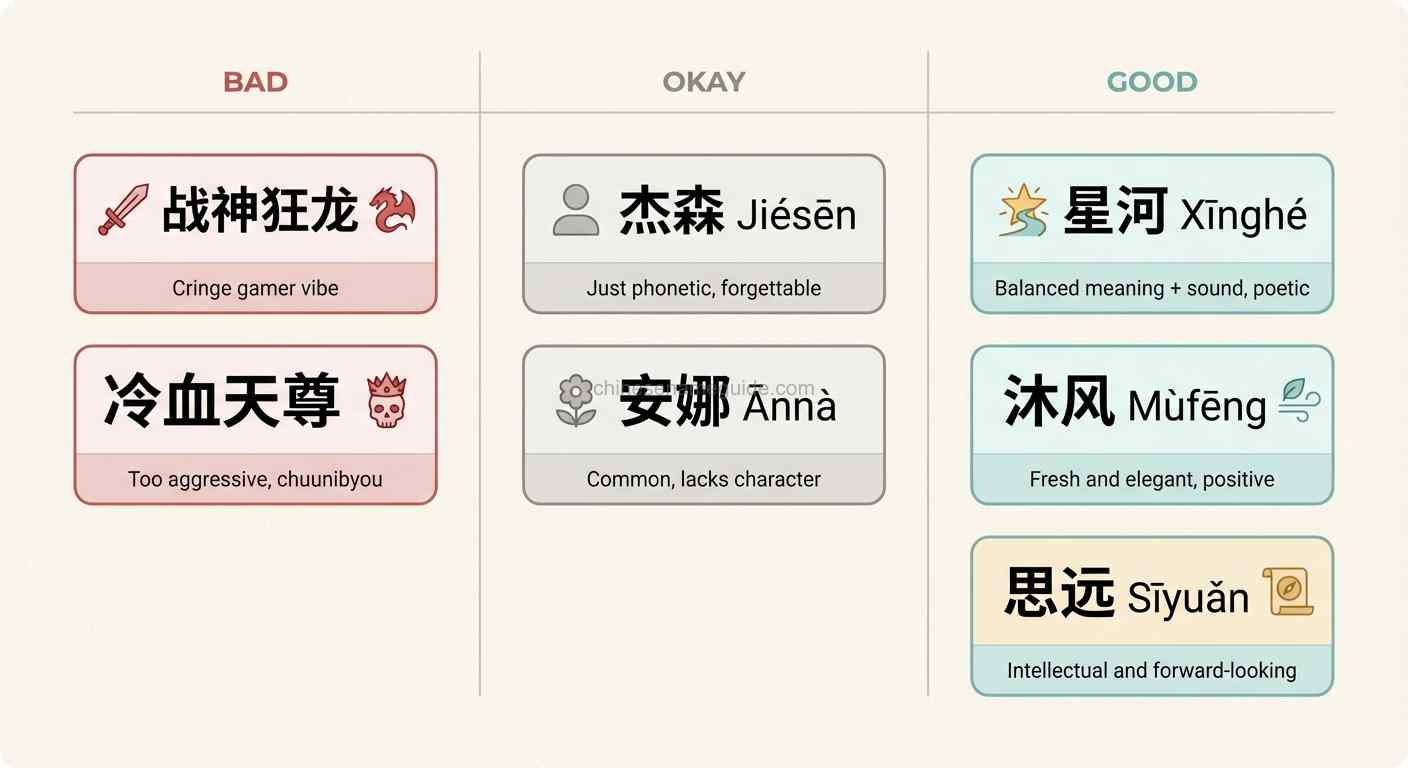
Why Most Chinese Name Generators Are Dangerous (Don't Get a Tattoo Yet!)
Before you tattoo a ‘cool Chinese name’ or launch a brand with it, read this. A brutally honest look at how most Chinese name generators actually work — and why they can quietly ruin your skin, your brand, or your reputation.