How to Choose a Chinese Name (That Native Speakers Actually Like)
A comprehensive guide on how to choose a Chinese name that sounds natural to native speakers, covering name structure, selection strategies, cultural considerations, and common mistakes to avoid.
If you’re learning Chinese, working with Chinese clients, or publishing to a Chinese audience, sooner or later this question pops up:
“I want a Chinese name. How do I choose one that doesn’t sound weird?”
Picking 「李可乐」 (“Coke Li”) might be funny for a week, but a name is like a tattoo: once people know you by it, it sticks.
This guide goes deep into how to choose a Chinese name that feels natural to native speakers, without losing who you are:
- How Chinese names are structured
- First decision: why you want a Chinese name
- How to pick a surname (or whether you need one)
- How given names really work (meaning, sound, gender, era)
- Three main strategies: sound-based, meaning-based, hybrid
- Should you care about 五行 / numerology?
- Regional issues: Mainland vs Taiwan vs Hong Kong vs overseas Chinese
- A step-by-step workflow you can follow
- Common mistakes foreigners make
- Mini case studies with example names
How Chinese Names Are Structured
Modern Chinese names are generally:
[Surname 姓 xìng] + [Given name 名 míng]
Key facts:
- The surname almost always comes first.
- It’s usually one character / one syllable: 李 Lǐ, 王 Wáng, 张 Zhāng, 陈 Chén, 刘 Liú, etc.
- The given name is one or two characters, with two-character given names now making up over 75–80% of modern names in Mainland China.
Example:
-
李小龙 Lǐ Xiǎolóng – Bruce Lee’s Chinese name
- 李 – surname
- 小龙 – given name (“little dragon”)
You’ll sometimes see double surnames (欧阳 Ōuyáng, 司马 Sīmǎ), but they’re rare compared to one-character surnames.
When Romanized in Hanyu Pinyin (the standard system in Mainland and for the UN), the convention is:
- Surname as one word: Wang, Li, Sima
- Given name as one word (even if two characters): Xiuying (not “Xiu Ying”)
First Decision: Why Do You Want a Chinese Name?
Your purpose shapes everything:
-
For language learning / school You want something easy to write and pronounce, not too formal. Teachers often assign simple 2-character given names plus a common surname.
-
For business / professional use You’ll want a name that:
- looks good on WeChat / business cards,
- isn’t childish or jokey,
- and is easy for Chinese colleagues to say and remember.
-
For publishing / online persona (pen name, artist name) You have more freedom:
- can lean a bit more poetic,
- can consider pen name styles (like web-novel authors),
- but still should sound intentional, not random.
-
For legal / official use (e.g., naturalization, Chinese passport) You must respect:
- local naming norms (no emojis or extra Latin letters),
- character sets supported by government systems (you usually can’t use ultra-rare characters).
Write down your purpose. It will help you decide how traditional / playful / serious your name should be.
Choosing a Surname: Keep It Simple (Usually)
1 How Chinese surnames work
-
The top 100 surnames (all one syllable) cover about 85% of Mainland China’s population.
-
The most common ones include:
- 李 Lǐ, 王 Wáng, 张 Zhāng, 刘 Liú, 陈 Chén, 杨 Yáng, 黄 Huáng, 赵 Zhào, 吴 Wú, 周 Zhōu.
Traditionally, children take the father’s surname, but modern law allows using either the father’s or the mother’s surname. In practice, most still use the father’s, though there is a visible (if small) shift towards using the mother’s surname in some urban families.
2 Options for foreigners
Option A – Adopt a very common Chinese surname Easiest and safest for most learners and professionals.
-
Examples: 王 Wáng, 李 Lǐ, 陈 Chén, 林 Lín, 赵 Zhào.
-
Pros:
- instantly feels “normal,”
- easy for people to remember and type.
-
Cons:
- your full name will be common (like “John Smith”).
Option B – Match your own surname
You can choose a Chinese surname by:
- Sound – e.g. “Lee” → 李 Lǐ, “Chan” → 陈 / 陈 variants, etc.
- Meaning – if your surname means “forest”, 林 Lín (“forest”) is cute and intuitive.
Because Chinese has many regional pronunciations, the same Chinese surname appears in English as Li/Lee/Lay, Chan/Chen/Tan, etc. That’s normal; characters are what really matter.
Option C – No surname (for casual handles only)
For an online username or game character, you could just use a 2-character “name” with no surname. But:
- It doesn’t look like a formal legal name,
- and Chinese people may treat it more like a nickname or ID.
For anything professional, it’s better to have a proper surname + given name structure.
How Chinese Given Names Really Work
Given names do most of the storytelling in Chinese.
1 One vs two characters
- Modern Chinese given names are almost always one or two characters.
- Since the late 20th century, two-character names have become dominant, often above 80% in Mainland.
One-character names feel:
- older, more traditional, or
- intentionally minimalist / strong.
Two-character names allow:
- combining two ideas (“wise + calm”, “forest + morning”),
- more uniqueness.
2 Meaning matters
Unlike many Western names where meanings are mostly historical trivia, every Chinese character has an obvious meaning for native speakers.
Common naming themes:
- Virtues – 诚 (honest), 善 (kind), 勇 (brave), 宁/寧 (peaceful)
- Nature – 林 (forest), 山 (mountain), 雨 (rain), 星 (star), 岚/嵐 (mountain mist)
- Light & sky – 明 (bright), 晨 (morning), 晴 (clear sky), 曦 (dawn light)
- Learning & talent – 文 (literature), 博 (broad), 颖/穎 (clever), 慧 (wise)
- Fortune & blessing – 福 (blessing), 祥 (auspicious), 瑞 (lucky omen)
Chinese name guides for parents emphasize that names should carry positive, aspirational meanings, and many modern parents choose names that express hopes about character, health, or life path.
3 Sound & tone
A good given name:
- is easy to pronounce in Mandarin,
- doesn’t create awkward tone patterns with the surname,
- and sounds smooth as a whole.
Native speakers pay attention (consciously or not) to:
- Tone flow – e.g., a 4th-tone surname plus a 4th-tone given name can sound very “heavy.”
- Alliteration / rhyme – some combos feel catchy; others feel clumsy.
You don’t need to become a prosody expert, but you do want a name that your teacher can say without tripping over it.
4.4 Gender & style
Chinese names are not grammatically gendered, but:
- Some characters lean feminine (flowers, beauty, softness)
- Others lean masculine (strength, martial imagery, dragons)
- Many are genuinely unisex (rain, morning, peace, wisdom)
If you want:
- a boyish name, you might favor strong, bold, or big world imagery.
- a girlish name, you might favor gentle, graceful, or bright/light imagery.
- a gender-neutral name, you’ll stay in the middle—nature, peace, cosmos, intellect.
Modern trends in Mainland China:
- Boys: cosmos (宇, 浩, 宸, 昊, 辰), strength (轩/軒, 赫, 霖), intellect (博, 文, 哲).
- Girls: nature & light (雨, 晨, 晴, 星, 岚), talent (颖, 慧, 思, 涵), plus some classic beauty characters.
You don’t have to follow trends, but knowing them helps you avoid names that feel 50 years out of date.
Three Main Strategies for Choosing Your Chinese Name
Think of these as three dials you can mix and match.
1 Sound-based (phonetic) names
Goal: echo the sound of your original name.
Examples:
- Anna → 安娜 Ānnà (very common, from 安 + 娜)
- Tony → 托尼 Tuōní (pure transliteration, often used for foreign celebrities)
- Eric → 艾瑞克 Àiruìkè (more brand-style than everyday name)
Pros:
- Easy link between your English name and Chinese name.
- People “get it” quickly when you introduce yourself.
Cons:
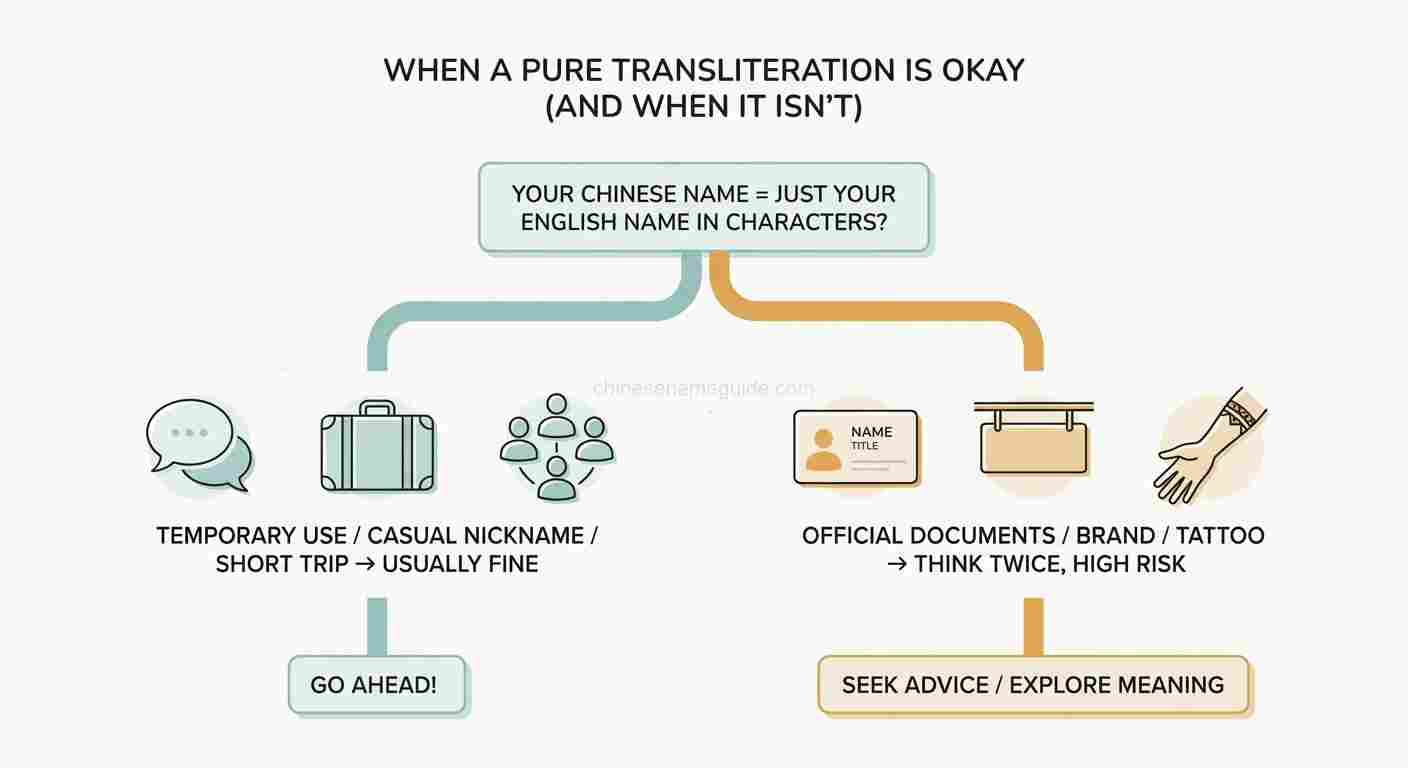
- Pure transliterations can feel like foreign brand names, not native names.
- You may get awkward or meaningless character combinations.
A better approach is often “soft transliteration”:
- Keep a loose sound connection and pick characters with good meanings.
2 Meaning-based (semantic) names
Goal: Express your personality, values, or interests, even if sound is different.
If your English name means “light”, or you love astronomy, you might choose:
- 晨曦 Chénxī – morning light
- 星辰 Xīngchén – stars & heavenly bodies
- 明远 / 明遠 Míngyuǎn – clear + far (clear vision, far-reaching)
Pros:
- You get a name that feels truly Chinese in style.
- Meaning can be tailored to your story or brand.
Cons:
- People may not see the connection to your original name.
- Requires more cultural sensitivity and native checks.
3 Hybrid names (sound + meaning)
Many of the best foreigner names attempt a compromise:
- Similar feel to your original name,
- but made from normal name characters with good meanings.
Example idea (just as a pattern):
-
Emma – likes “calm / nature / reading”
- Surname: 林 Lín (forest)
- Given name: 思雨 Sīyǔ (“think + rain” – thoughtful, gentle)
- Full name: 林思雨 Lín Sīyǔ
Sound is not identical to “Emma”, but the name:
- is short & easy,
- has a nice meaning,
- and feels like a plausible Chinese person’s name.
Hybrid is usually the sweet spot for foreigners:
recognizable to you, reasonable to native speakers.
What About 五行, 八字, and Name Numerology?
If you start googling Chinese names, you quickly run into:
- 五行 (Five Elements: wood, fire, earth, metal, water)
- 八字 (birth date/time “four pillars”)
- 姓名学 / 姓名學 (name numerology)
- stroke-count calculators for fortune
These systems try to match:
- your birth chart (date/time)
- with the stroke counts and elemental attributes of surname + given name,
- to produce an “auspicious” combination.
Some families take this very seriously, especially for baby names.
For you as a non-native:
- It’s optional, not required.
- These systems are complex and differ between schools; random online calculators can be inconsistent.
- If you’re curious, you can treat it as a nice extra check, not the main driver.
Unless you’re working with a trusted practitioner, focusing on:
- natural usage,
- good meaning,
- good sound,
will give you a much better result than trying to min-max numerology by yourself.
Regional Differences You Should Know
“Chinese name” can mean slightly different things in different places.
1 Mainland China (Simplified + Pinyin)
-
Characters: Simplified Chinese (简体字).
-
Romanization: Hanyu Pinyin is the standard.
-
If your main contacts are in Mainland, choose:
- characters that exist and display well in Simplified,
- a Pinyin spelling without added hyphens or accents (tones are often dropped in everyday writing).
2 Taiwan (Traditional + various romanizations)
-
Characters: Traditional Chinese (繁體字).
-
Romanization:
- Hanyu Pinyin is official, but many people stick to older spellings (Wade-Giles, Tongyong, or family traditions).
-
Example: Tsai Ing-wen = 蔡英文 (Cài Yīngwén), but official English keeps “Tsai Ing-wen”.
If you’re anchored in Taiwan:
- You may want a Traditional form first, then later map to Simplified if needed.
3 Hong Kong / Macau (Traditional + Cantonese pronunciations)
-
Characters: Traditional.
-
Romanization: reflects Cantonese, not Mandarin.
- 陈 Chén (Mandarin) → Chan (Cantonese),
- 李 Lǐ → Lee, etc.
For day-to-day life there, you might care more about Cantonese sound than Mandarin.
4 Overseas Chinese communities
You’ll see many variant spellings:
- Tan (陈 / 陳), Lim/Lam (林), Teo/Teoh (张/鄭 etc., depending on dialect).
For your own name, it’s usually best to:
- decide which Chinese-speaking region you’re targeting first,
- then design your name for that region’s script + pronunciation.
A Step-by-Step Workflow to Choose Your Chinese Name
Here’s a concrete process you can follow.
Step 1 – Clarify use case & region
Answer quickly:
- Main purpose? (study / business / pen name / legal)
- Main region? (Mainland / Taiwan / HK / global online)
- Gender vibe? (masculine / feminine / neutral)
Step 2 – Choose a surname (or confirm you need one)
- No strong reason? → pick a common surname: 李, 王, 张, 陈, 林…
- Want a link to your own surname? → pick something sound- or meaning-related.
- For casual online handles only → you can skip surname, but it will feel like a nickname.
Step 3 – Define your “name vibe” in 3–5 English words
Examples:
- calm, bookish, thoughtful
- bright, optimistic, friendly
- strong, steady, reliable
- creative, dreamy, cosmic
This prevents you from blindly chasing cool-looking characters.
Step 4 – Build a mini character bank
Using dictionaries or curated lists, collect:
- 6–12 characters that match your vibe,
- all with positive meanings,
- and that are commonly seen in real names.
For example, for “calm, bookish, thoughtful” you might gather:
- 安 (peace), 宁/寧 (calm), 思 (think), 文 (literature), 晨 (morning), 星 (star), 林 (forest), 澄 (clear), 涵 (contain / cultured).
Step 5 – Combine into 1–2 candidate given names
Try patterns like:
- [virtue] + [nature/sky] → 安星, 宁晨, 思雨
- [nature] + [light] → 林曦, 星辰, 晨光
- [learning] + [virtue] → 文安, 思宁, 博仁
Say them out loud in Mandarin (or with Pinyin) plus your surname:
- Does it flow?
- Any tongue-twisters?
- Any accidental weird words?
Step 6 – Sanity-check with search
Quickly search your full name (in characters) on:
- Baidu / Google,
- Weibo / Bilibili / Xiaohongshu (if relevant),
to see:
- Are you colliding with a huge celebrity?
- Is this a known brand or meme phrase?
It’s fine to share a name with ordinary people, but avoid extremely strong collisions unless you want that association.
Step 7 – Ask 1–2 native speakers
This is the most important step.
Ask them:
- “If you see this name, do you read it as male / female / neutral?”
- “Does it sound natural? Very old? Very trendy? Like a real person or a screen name?”
- “Any strange meanings, puns, or famous references I’m missing?”
Be willing to adjust. Tiny tweaks (swapping one character) can flip a name from “weird” to “great”.
Step 8 – Decide romanization & signatures
Once you choose a final name:
-
Decide how you’ll write it in Latin letters:
- Mainland style: Wang Xinyu
- Taiwan/HK may prefer family traditional spelling.
-
Practice signing it (even if just for fun): characters + Pinyin.
Now you have a Chinese name you can really live with.
Common Mistakes Foreigners Make
-
Copying a random celebrity’s name exactly
- Legally allowed in China, but socially… odd.
-
Choosing characters only by appearance
- Some pretty characters have awkward meanings or are ultra-rare and hard to type.
-
Overdoing “cool” elements (龙, 虎, 神, 魔, 帝…)
- Put all of them together and your name sounds like a teenage game handle, not a real person.
-
Using transliterations that sound like brands
- E.g., 艾丽可 for “Eric” or weird multi-syllable imports can look like product names.
-
Ignoring gender/era feel
- A name that screams “1950s grandma” or “internet novel protagonist” might not match your actual age or context.
-
Putting spaces/hyphens in strange places in Pinyin
- “Wang Xiuying” is right; “Wang Xiu Ying” or “Wang XiuYing” is non-standard.
-
Skipping the native-speaker check
- This is like getting a tattoo in Japanese kanji without asking any Japanese person. Don’t.
Mini Case Studies (How the Process Plays Out)
To make this concrete, here are three fictional scenarios.
Case 1 – Language learner, friendly & simple
-
Profile:
- Name: Emily
- Purpose: university Chinese classes + daily life
- Vibe: friendly, gentle, studious
- Region: Mainland / Pinyin
Surname: 李 Lǐ (common, easy)
Character bank: 安, 宁, 思, 晨, 林, 星, 涵
Try combos:
- 思宁 Sīníng – thoughtful + peaceful
- 晨星 Chénxīng – morning star
- 林安 Lín’ān – forest + peace (as given name if surname isn’t 林)
Pick: 李思宁 Lǐ Sīníng
- Meaning: “peaceful thoughts”
- Gender: reads as feminine but not sugary
- Style: modern but not overly trendy
Case 2 – Business professional, male, wants serious & modern
-
Profile:
- Name: David
- Purpose: business card, LinkedIn/WeChat, clients in Shanghai/Beijing
- Vibe: calm, reliable, forward-looking
- Region: Mainland
Surname: 王 Wáng
Character bank: 宇, 明, 远, 昊, 辰, 文, 安
Try combos:
- 宇安 Yǔ’ān – universe + peace
- 明远 Míngyuǎn – clear + far
- 昊辰 Hàochén – vast sky + heavenly bodies (quite trendy)
Pick: 王明远 Wáng Míngyuǎn
- Meaning: “clear vision reaching far”
- Gender: solid masculine
- Style: timeless enough to fit mid-30s professional
Case 3 – Online creator, gender-neutral, cosmic / artsy
-
Profile:
- Name: Alex (non-binary artist)
- Purpose: pen name for webcomics / social media
- Vibe: cosmic, thoughtful, slightly mysterious
- Region: international online, but mostly Simplified + Pinyin
No strict need for surname, but let’s choose one for completeness:
Surname: 林 Lín (forest)
Character bank: 星, 宙, 宇, 澄, 墨, 川, 雨
Combos:
- 星澄 Xīngchéng – star + clear
- 宇墨 Yǔmò – universe + ink
- 雨川 Yǔchuān – rain + river
Pick: 林宇墨 Lín Yǔmò
- Meaning: “forest + cosmic ink” (fits an artist)
- Gender: reads fairly neutral; nothing strongly gendered
- Style: clearly a pen name, but still built from normal, tasteful characters
Wrap-up
Choosing a Chinese name is less about “finding the official Chinese version of Emma/John” and more about:
- respecting Chinese naming structure and culture,
- deciding who you want to be in Chinese,
- then designing a small, meaningful piece of language around that.
If you follow this pattern:
- Understand structure (surname + 1–2-character given name)
- Decide purpose + region + vibe
- Pick a simple, natural surname
- Build a character bank based on meaning, not just looks
- Combine → search → ask native speakers → refine
…you’ll end up with a Chinese name that:
- feels right to you,
- makes sense to Chinese readers,
- and you won’t cringe at five years from now.
Related Articles
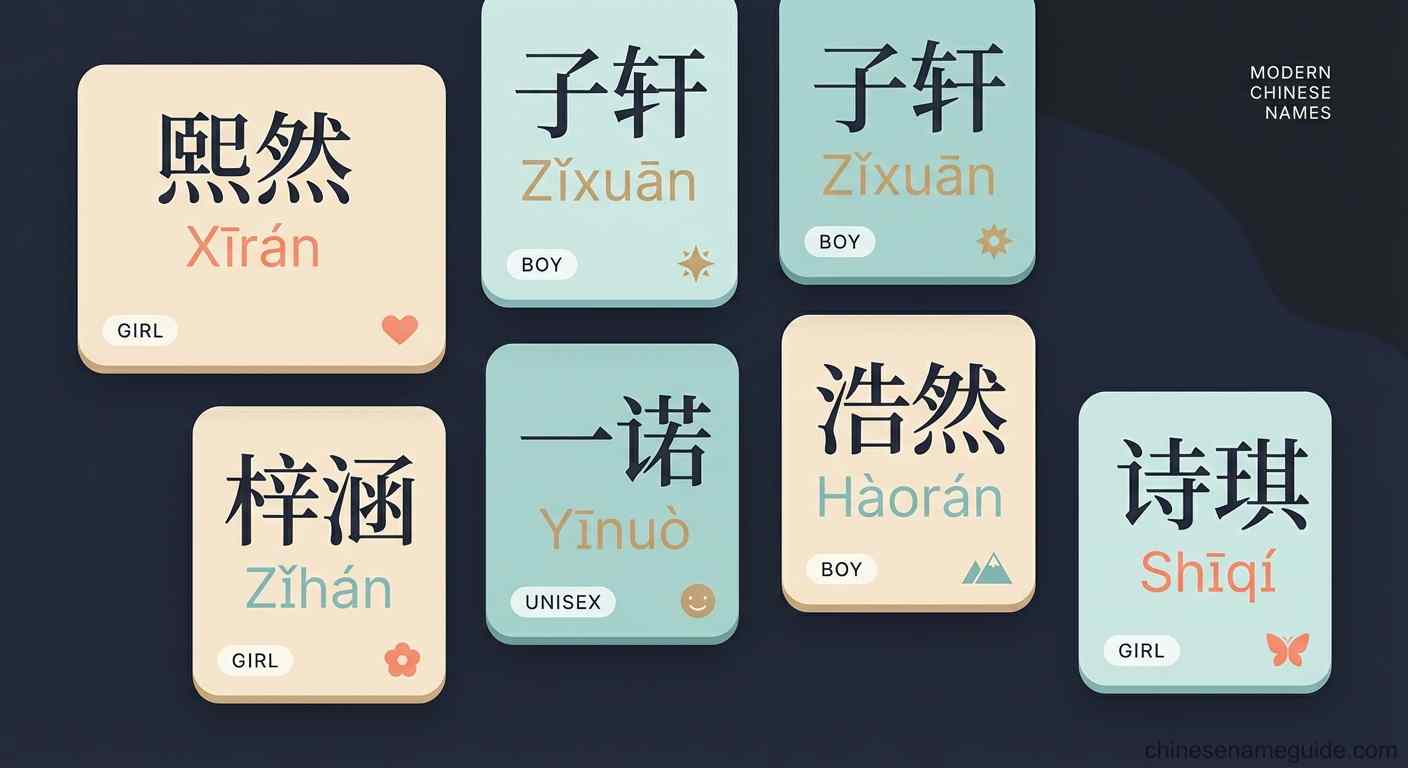
Modern Chinese Names: What Kids Are Actually Called Now
Forget Li Ming and Wang Wei. A ground-level look at what Chinese kids are really named today, what those names signal, and how to sound modern without sounding ridiculous.
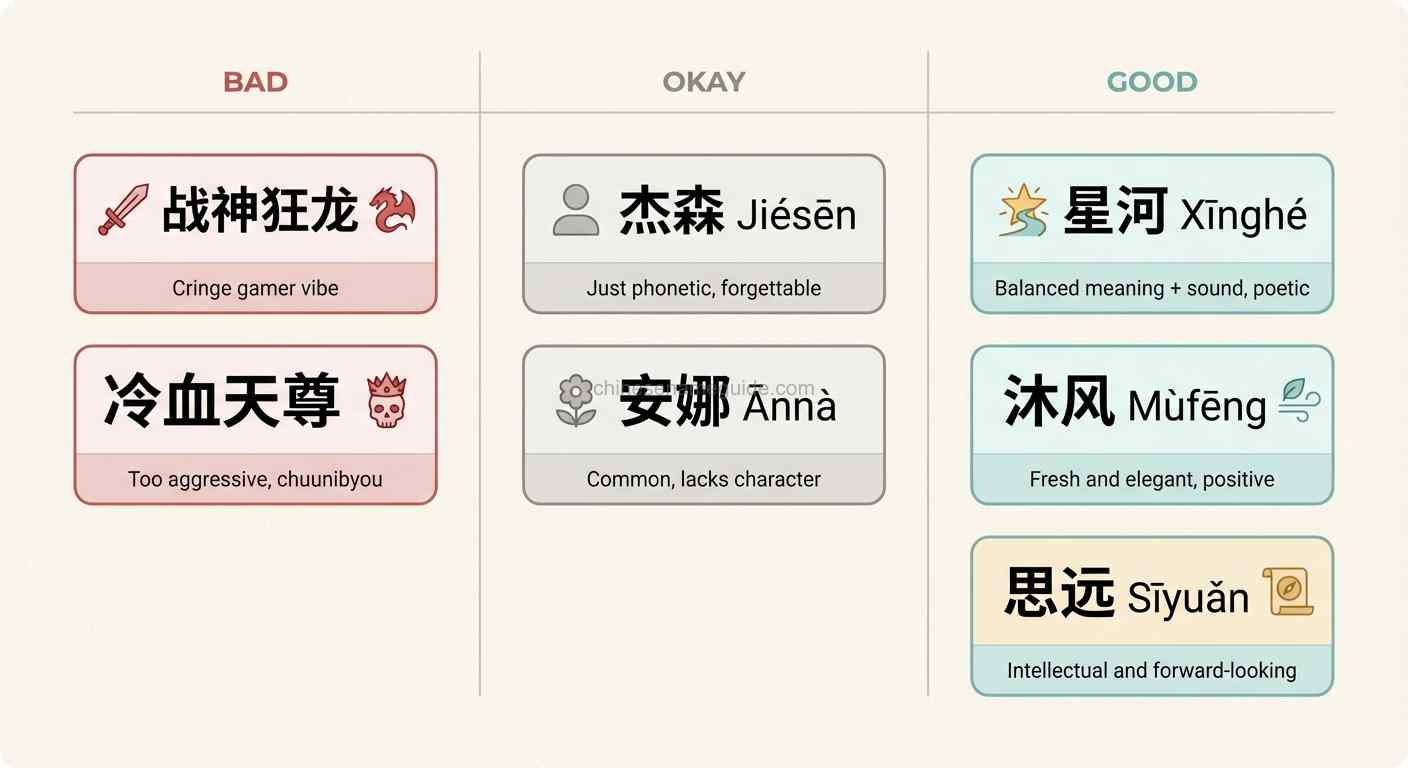
Why Most Chinese Name Generators Are Dangerous (Don't Get a Tattoo Yet!)
Before you tattoo a ‘cool Chinese name’ or launch a brand with it, read this. A brutally honest look at how most Chinese name generators actually work — and why they can quietly ruin your skin, your brand, or your reputation.