
Understanding Chinese Names: A Complete Guide
A comprehensive guide to Chinese naming conventions, including common surnames, first name selection, and cultural significance.
Chinese surnames are patrilineal and typically precede the given name. With over 4,000 surnames recorded historically, today only about 100 are commonly used. The vast majority of China's population shares a relatively small pool of family names.
Top 10 Most Common Chinese Surnames
According to recent census data, these are the most prevalent surnames in mainland China:
- 王 (Wáng) - Meaning "king" or "monarch," shared by over 100 million people
- 李 (Lǐ) - Meaning "plum," historically the imperial surname of the Tang Dynasty
- 张 (Zhāng) - Meaning "to stretch" or "archer"
- 刘 (Liú) - Meaning "kill" or "battle-axe," originating from ancient titles
- 陈 (Chén) - Meaning "to exhibit" or "ancient," common in southern China
- 杨 (Yáng) - Meaning "poplar tree" or "sun"
- 黄 (Huáng) - Meaning "yellow," also associated with imperial color
- 赵 (Zhào) - A former royal surname from the Warring States period
- 吴 (Wú) - Originating from the ancient state of Wu
- 周 (Zhōu) - Named after the Zhou Dynasty
Together, these ten surnames account for approximately 40% of the Chinese population.
How Are Chinese First Names Chosen?
Chinese given names typically consist of one or two characters and carry significant cultural weight. Parents often invest considerable time in selecting names that will positively influence their child's life.
Chinese Characters
Each character in a Chinese name carries specific meaning, unlike phonetic alphabets. Parents select characters based on:
- Virtues and aspirations: 伟 (Wěi, great), 慧 (Huì, wisdom), 勇 (Yǒng, courage)
- Natural elements: 海 (Hǎi, ocean), 林 (Lín, forest), 雪 (Xuě, snow)
- Cultural references: Classical poetry, historical figures, or philosophical concepts
The combination of characters creates a cohesive meaning. For example, 明 (Míng, bright) + 辉 (Huī, radiance) forms "bright radiance."
Birth and Fortune
Traditional naming practices often incorporate:
- Five Elements Theory (五行 Wǔxíng): Names may include characters representing wood, fire, earth, metal, or water to balance a child's supposed elemental deficiency based on birth date and time.
- Zodiac signs: The year's zodiac animal might influence character selection.
- Fortune-telling: Some families consult feng shui masters or use numerology to determine auspicious characters and stroke counts.
Tonal Harmony
Mandarin Chinese has four tones (plus neutral tone), and name selection considers:
- Flow and rhythm: Avoiding consecutive characters with the same tone that sound monotonous
- Auspicious sound-alikes: Characters that sound like positive words (e.g., 福 fú, fortune)
- Avoiding negative homophones: Steering clear of sounds resembling "death" (死 sǐ), "loss" (输 shū), or "difficult" (难 nán)
Naming Taboos
Chinese naming culture observes several important restrictions:
- Avoiding ancestors' names: Using the same characters as recent ancestors is considered disrespectful
- No imperial names: Historically, using characters from the emperor's name was forbidden
- No negative meanings: Characters with inherently bad meanings are never used
- Gender appropriateness: While some names are unisex, most lean toward masculine or feminine
Top 10 Most Common Chinese First Names
Modern Chinese first names reflect both traditional values and contemporary trends. Note that Chinese given names are highly diverse, but certain characters appear frequently.
Most Common First Names for Chinese Girls
Popular characters include those signifying beauty, grace, and virtue:
- 娜 (Nà) - Graceful
- 静 (Jìng) - Quiet, peaceful
- 敏 (Mǐn) - Quick, clever
- 丽 (Lì) - Beautiful
- 慧 (Huì) - Intelligent
- 娟 (Juān) - Graceful, delicate
- 艳 (Yàn) - Gorgeous, brilliant
- 芳 (Fāng) - Fragrance, virtuous
- 婷 (Tíng) - Graceful, elegant
- 琳 (Lín) - Jade-like beauty
Common combinations include 丽娜 (Lìnà), 静敏 (Jìngmǐn), and 慧芳 (Huìfāng).
Most Common First Names for Chinese Boys
Male names often emphasize strength, ambition, and greatness:
- 伟 (Wěi) - Great, mighty
- 强 (Qiáng) - Strong, powerful
- 杰 (Jié) - Outstanding, heroic
- 勇 (Yǒng) - Brave
- 宇 (Yǔ) - Universe, cosmos
- 浩 (Hào) - Vast, grand
- 磊 (Lěi) - Honest, upright
- 超 (Chāo) - To surpass
- 鹏 (Péng) - Mythical great bird
- 飞 (Fēi) - To fly
Popular combinations: 伟强 (Wěiqiáng), 杰宇 (Jiéyǔ), 浩鹏 (Hàopéng).
Maiden and Married Names
Unlike Western customs, Chinese women traditionally do not change their surnames after marriage. This practice stems from:
- Patrilineal records: Family lineage is traced through the male line, making surname changes unnecessary
- Legal consistency: Maintaining the birth surname simplifies legal and administrative processes
- Professional identity: Keeping the original name preserves one's established professional reputation
However, some modern variations exist:
- Hyphenated surnames: Some women add their husband's surname before theirs (e.g., 王-李 Wáng-Lǐ)
- Children's names: There's growing debate about allowing children to take the mother's surname
Nicknames and Terms of Endearment
Chinese culture features rich nickname traditions that reflect relationships and familiarity.
老 (Lǎo, old)
Used among peers to show familiarity and respect:
- 老刘 (Lǎo Liú) - "Old Liu" for someone older or of similar age
- 老王 (Lǎo Wáng) - Commonly used for familiar male colleagues or friends
- Becomes more endearing with age, not necessarily indicating literal old age
小 (Xiǎo, little)
Denotes youth or affection:
- 小李 (Xiǎo Lǐ) - "Little Li" for younger colleagues or juniors
- 小明 (Xiǎo Míng) - Often used for children
- Can persist into adulthood as a term of endearment from elders
阿 (Ā, no distinct meaning)
A prefix creating intimacy, common in southern China:
- 阿芳 (Ā Fāng) - Affectionate form for someone named 芳
- 阿杰 (Ā Jié) - Casual form for 杰
- 阿强 (Ā Qiáng) - Very common in Cantonese-speaking regions
Example: Our Friend 王宇航 (Wáng Yǔháng)
Let's see how nicknames work for 王宇航 (Wáng Yǔháng - "cosmic voyage"):
- Professional: Colleagues call him 老王 (Lǎo Wáng) after working together for years
- Family: His parents call him 宇航, while grandparents use 小航 (Xiǎo Háng)
- Close Friends: They might call him 阿宇 (Ā Yǔ) or simply 宇哥 (Yǔ gē, "Brother Yu")
- Childhood: Schoolmates called him 小王 (Xiǎo Wáng), later graduating to 老王
Adaptation of English Names
Lost in Translation
Translating English names into Chinese involves more than phonetic similarity. Challenges include:
- Meaning over sound: Chinese speakers often prioritize meaningful characters over accurate pronunciation
- Phonetic limitations: English sounds like "th," "v," and certain consonant clusters don't exist in Mandarin
- Character selection: Multiple characters may share the same sound but have vastly different meanings (e.g., 马 Mǎ "horse" vs. 玛 Mǎ "agate")
Common adaptations:
- John becomes 约翰 (Yuēhàn) - phonetic approximation
- Mary becomes 玛丽 (Mǎlì) - combining phonetic and positive meaning characters
- David becomes 大卫 (Dàwèi) - "great protection"
The Growing Influence of Mandarin Chinese
As China's global influence expands:
- Reverse adaptation: Chinese individuals increasingly keep their birth names in international settings
- Brand names: Foreign companies carefully select Chinese names that sound similar AND convey positive meanings (e.g., Coca-Cola: 可口可乐 Kěkǒukělè, "tasty and joyful")
- Preservation of tones: Proper name pronunciation is becoming more important in global business and diplomacy
Choosing Your Chinese Name
Selecting an authentic Chinese name requires cultural understanding beyond simple translation.
Consult a Native Chinese Speaker
This is the most crucial step. A native speaker can help with:
- Cultural appropriateness: Ensuring the name doesn't have unintended negative connotations
- Regional variations: Accounting for dialect differences and local naming customs
- Natural flow: Making sure the name sounds authentic, not "foreign"
- Stroke count: Considering the complexity of writing the characters
How Do I Say My Name in Chinese?
You have three main options:
- Phonetic translation: Choose characters that sound like your name (e.g., Christopher → 克里斯托弗 Kèlǐsītuōfú)
- Meaning-based: Translate the meaning of your name (e.g., Grace → 恩 ēn, "grace/kindness")
- Cultural adoption: Select an entirely new Chinese name that fits your personality
Best practice: Use option 3 combined with a phonetic approximation of your surname. For example, a person named "David Johnson" might become 江大卫 (Jiāng Dàwèi), where 江 approximates "John-" and 大卫 is the standard adaptation of David.
Chinese Name Vocabulary
- 姓名 (xìngmíng) - Full name
- 姓 (xìng) - Surname/family name
- 名 (míng) - Given name
- 名字 (míngzi) - Name (colloquial)
- 起名 (qǐmíng) - To name someone
- 全名 (quánmíng) - Full/complete name
- 别名 (biémíng) - Alias, nickname
- 小名 (xiǎomíng) - Childhood nickname
- 昵称 (nìchēng) - Nickname (modern term)
- 笔名 (bǐmíng) - Pen name
- 学名 (xuémíng) - Formal name (on official documents)
- 乳名 (rǔmíng) - Infant name
Understanding these terms helps navigate Chinese naming culture with respect and accuracy.
Related Articles
How to Pronounce Chinese Names with Pinyin: A Practical Guide for Non-Native Speakers
A practical guide to pronouncing Chinese names written in pinyin, covering name structure, pinyin basics, common patterns, and practice tips for non-native speakers.
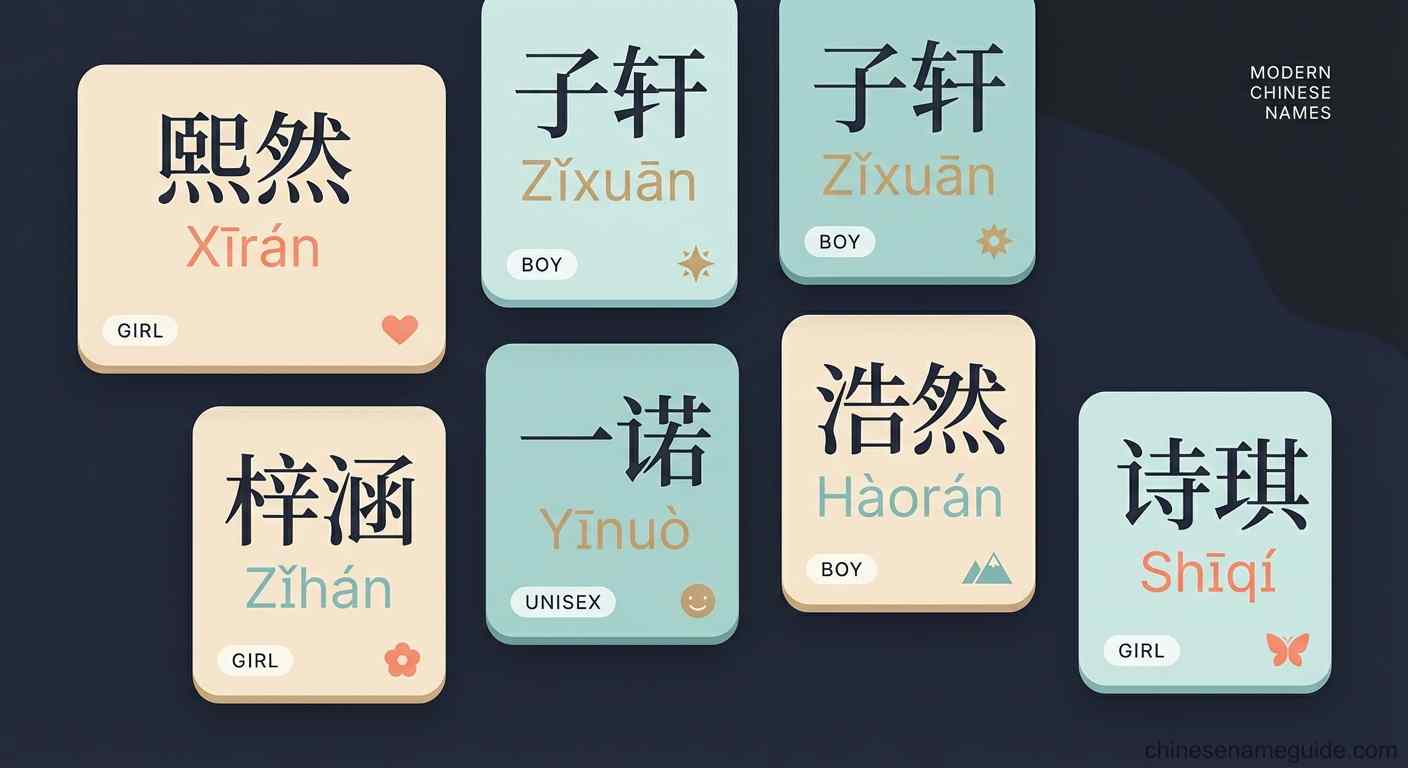
Modern Chinese Names: What Kids Are Actually Called Now
Forget Li Ming and Wang Wei. A ground-level look at what Chinese kids are really named today, what those names signal, and how to sound modern without sounding ridiculous.
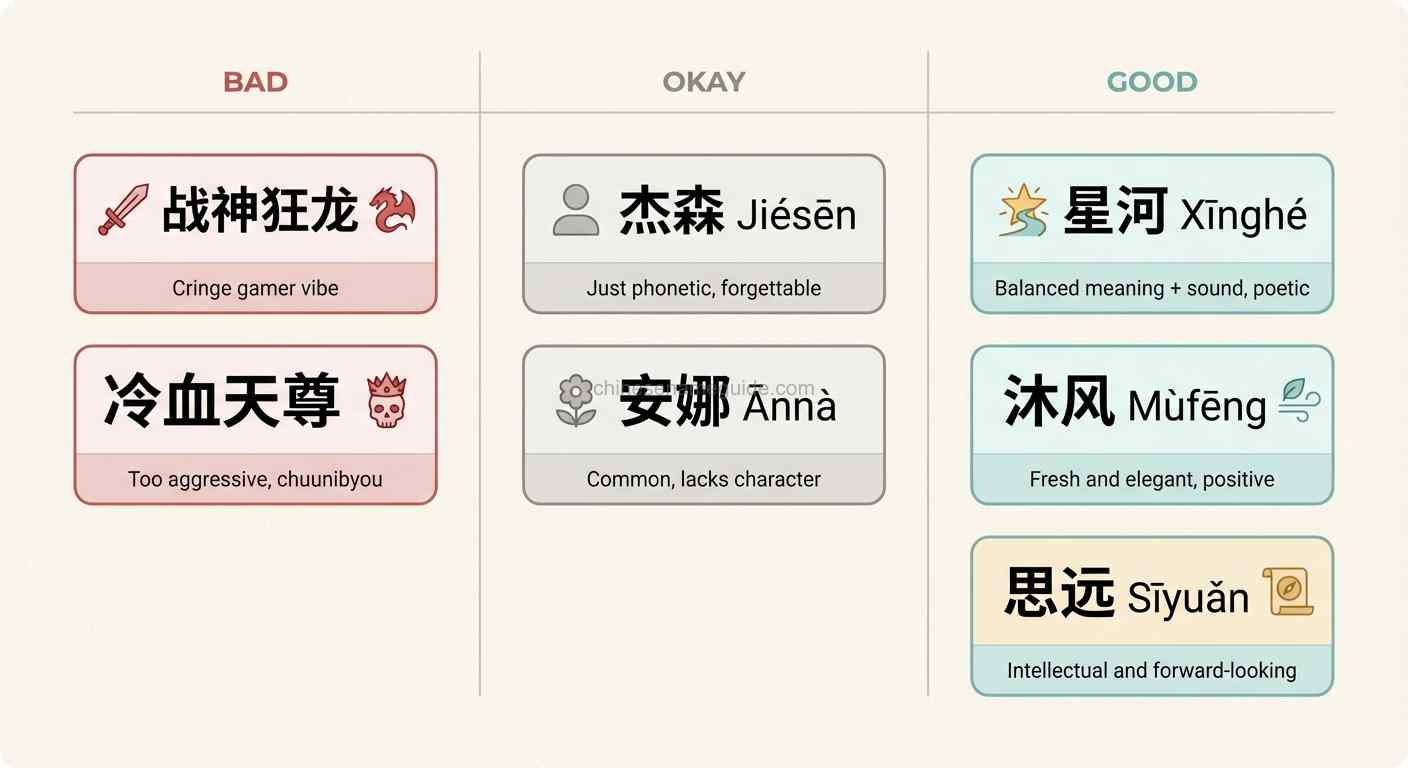
Why Most Chinese Name Generators Are Dangerous (Don't Get a Tattoo Yet!)
Before you tattoo a ‘cool Chinese name’ or launch a brand with it, read this. A brutally honest look at how most Chinese name generators actually work — and why they can quietly ruin your skin, your brand, or your reputation.